Adsense

Sunday, January 22, 2017

The Horla by Guy de Maupassant is Best Horror Short Story 13 from 1850-1899

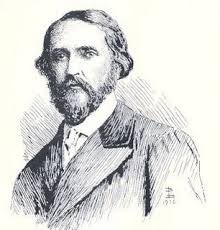
Guy de Maupassant
1850-1893

Guy de Maupassant was raised in a bourgeois French family. He befriended Gustave Flaubert and Alexander Dumas. His family entertained the likes of Emile Zola and Ivan Turgenev at their home. Maupassant is known today for his short stories and a number of them focused on horror in its various forms. La Horla is his best horror short story, but perhaps drawing heavily from "What Was It?" published nearly 30 prior in 1859 by Fitz-James O'Brien. It is set in the heat of the summer and I pick the scary short story as the 13th best from 1850-1899.


The Horla
1887

  May 8. What a lovely day! I have spent all the morning lying on the grass in front of my house, under the enormous plantain tree which covers and shades and shelters the whole of it. I like this part of the country; I am fond of living here because I am attached to it by deep roots, the profound and delicate roots which attach a man to the soil on which his ancestors were born and died, to their traditions, their usages, their food, the local expressions, the peculiar language of the peasants, the smell of the soil, the hamlets, and to the atmosphere itself.

     I love the house in which I grew up. From my windows I can see the Seine, which flows by the side of my garden, on the other side of the road, almost through my grounds, the great and wide Seine, which goes to Rouen and Havre, and which is covered with boats passing to and fro.

     On the left, down yonder, lies Rouen, populous Rouen with its blue roofs massing under pointed, Gothic towers. Innumerable are they, delicate or broad, dominated by the spire of the cathedral, full of bells which sound through the blue air on fine mornings, sending their sweet and distant iron clang to me, their metallic sounds, now stronger and now weaker, according as the wind is strong or light.

     What a delicious morning it was! About eleven o'clock, a long line of boats drawn by a steam-tug, as big a fly, and which scarcely puffed while emitting its thick smoke, passed my gate.

     After two English schooners, whose red flags fluttered toward the sky, there came a magnificent Brazilian three-master; it was perfectly white and wonderfully clean and shining. I saluted it, I hardly know why, except that the sight of the vessel gave me great pleasure.

     May 12. I have had a slight feverish attack for the last few days, and I feel ill, or rather I feel low-spirited.

     Whence come those mysterious influences which change our happiness into discouragement, and our self-confidence into diffidence? One might almost say that the air, the invisible air, is full of unknowable Forces, whose mysterious presence we have to endure. I wake up in the best of spirits, with an inclination to sing in my heart. Why? I go down by the side of the water, and suddenly, after walking a short distance, I return home wretched, as if some misfortune were awaiting me there. Why? Is it a cold shiver which, passing over my skin, has upset my nerves and given me a fit of low spirits? Is it the form of the clouds, or the tints of the sky, or the colors of the surrounding objects which are so change-able, which have troubled my thoughts as they passed before my eyes? Who can tell? Everything that surrounds us, everything that we see without looking at it, everything that we touch without knowing it, everything that we handle without feeling it, everything that we meet without clearly distinguishing it, has a rapid, surprising, and inexplicable effect upon us and upon our organs, and through them on our ideas and on our being itself.

     How profound that mystery of the Invisible is! We cannot fathom it with our miserable senses: our eyes are unable to perceive what is either too small or too great, too near to or too far from us; we can see neither the inhabitants of a star nor of a drop of water; our ears deceive us, for they transmit to us the vibrations of the air in sonorous notes. Our senses are fairies who work the miracle of changing that movement into noise, and by that metamorphosis give birth to music, which makes the mute agitation of nature a harmony. So with our sense of smell, which is weaker than that of a dog, and so with our sense of taste, which can scarcely distinguish the age of a wine!

     Oh! If we only had other organs which could work other miracles in our favor, what a number of fresh things we might discover around us!

     May 16. I am ill, decidedly! I was so well last month! I am feverish, horribly feverish, or rather I am in a state of feverish enervation, which makes my mind suffer as much as my body. I have without ceasing the horrible sensation of some danger threatening me, the apprehension of some coming misfortune or of approaching death, a presentiment which is no doubt, an attack of some illness still unnamed, which germinates in the flesh and in the blood.

     May 18. I have just come from consulting my medical man, for I can no longer get any sleep. He found that my pulse was high, my eyes dilated, my nerves highly strung, but no alarming symptoms. I must have a course of shower baths and of bromide of potassium.

   May 25. No change! My state is really very peculiar. As the evening comes on, an incomprehensible feeling of disquietude seizes me, just as if night concealed some terrible menace toward me. I dine quickly, and then try to read, but I do not understand the words, and can scarcely distinguish the letters. Then I walk up and down my drawing-room, oppressed by a feeling of confused and irresistible fear, a fear of sleep and a fear of my bed.

     About ten o'clock I go up to my room. As soon as I have entered I lock and bolt the door. I am frightened - of what? Up till the present time I have been frightened of nothing. I open my cupboards, and look under my bed; I listen - I listen - to what? How strange it is that a simple feeling of discomfort, of impeded or heightened circulation, perhaps the irritation of a nervous center, a slight congestion, a small disturbance in the imperfect and delicate functions of our living machinery, can turn the most light-hearted of men into a melancholy one, and make a coward of the bravest? Then, I go to bed, and I wait for sleep as a man might wait for the executioner. I wait for its coming with dread, and my heart beats and my legs tremble, while my whole body shivers beneath the warmth of the bedclothes, until the moment when I suddenly fall asleep, as a man throws himself into a pool of stagnant water in order to drown. I do not feel this perfidious sleep coming over me as I used to, but a sleep which is close to me and watching me, which is going to seize me by the head, to close my eyes and annihilate me.

     I sleep - a long time - two or three hours perhaps - then a dream - no - a nightmare lays hold on me. I feel that I am in bed and asleep - I feel it and I know it - and I feel also that somebody is coming close to me, is looking at me, touching me, is getting on to my bed, is kneeling on my chest, is taking my neck between his hands and squeezing it - squeezing it with all his might in order to strangle me.

     I struggle, bound by that terrible powerlessness which paralyzes us in our dreams; I try to cry out - but I cannot; I want to move - I cannot; I try, with the most violent efforts and out of breath, to turn over and throw off this being which is crushing and suffocating me - I cannot!

     And then suddenly I wake up, shaken and bathed in perspiration; I light a candle and find that I am alone, and after that crisis, which occurs every night, I at length fall asleep and slumber tranquilly till morning.

     June 2. My state has grown worse. What is the matter with me? The bromide does me no good, and the shower-baths have no effect whatever. Sometimes, in order to tire myself out, though I am fatigued enough already, I go for a walk in the forest of Roumare. I used to think at first that the fresh light and soft air, impregnated with the odor of herbs and leaves, would instill new life into my veins and impart fresh energy to my heart. One day I turned into a broad ride in the wood, and then I diverged toward La Bouille, through a narrow path, between two rows of exceedingly tall trees, which placed a thick, green, almost black roof between the sky and me.

     A sudden shiver ran through me, not a cold shiver, but a shiver of agony, and so I hastened my steps, uneasy at being alone in the wood, frightened stupidly and without reason, at the profound solitude. Suddenly it seemed as if I were being followed, that somebody was walking at my heels, close, quite close to me, near enough to touch me.

     I turned round suddenly, but I was alone. I saw nothing behind me except the straight, broad ride, empty and bordered by high trees, horribly empty; on the other side also it extended until it was lost in the distance, and looked just the same - terrible.

     I closed my eyes. Why? And then I began to turn round on one heel very quickly, just like a top. I nearly fell down, and opened my eyes; the trees were dancing round me and the earth heaved; I was obliged to sit down. Then, ah! I no longer remembered how I had come! What a strange idea! What a strange, strange idea! I did not the least know. I started off to the right, and got back into the avenue which had led me into the middle of the forest.

     June 3. I have had a terrible night. I shall go away for a few weeks, for no doubt a journey will set me up again.

     July 2. I have come back, quite cured, and have had a most delightful trip into the bargain. I have been to Mont Saint-Michel, which I had not seen before.

     What a sight, when one arrives as I did, at Avranches toward the end of the day! The town stands on a hill, and I was taken into the public garden at the extremity of the town. I uttered a cry of astonishment. An extraordinarily large bay lay extended before me, as far as my eyes could reach, between two hills which were lost to sight in the mist; and in the middle of this immense yellow bay, under a clear, golden sky, a peculiar hill rose up, somber and pointed in the midst of the sand. The sun had just disappeared, and under the still flaming sky stood out the outline of that fantastic rock which bears on its summit a picturesque monument.

     At daybreak I went to it. The tide was low, as it had been the night before, and I saw that wonderful abbey rise up before me as I approached it. After several hours' walking, I reached the enormous mass of rock which supports the little town, dominated by the great church. Having climbed the steep and narrow street, I entered the most wonderful Gothic building that has ever been erected to God on earth, large as a town, and full of low rooms which seem buried beneath vaulted roofs, and of lofty galleries supported by delicate columns.

     I entered this gigantic granite jewel, which is as light in its effect as a bit of lace and is covered with towers, with slender belfries to which spiral staircases ascend. The flying buttresses raise strange heads that bristle with chimeras. with devils, with fantastic ani-mals, with monstrous flowers, are joined together by finely carved arches, to the blue sky by day, and to the black sky by night.

     When I had reached the summit. I said to the monk who accompanied me: "Father, how happy you must be here!" And he replied: "It is very windy, Monsieur"; and so we began to talk while watching the rising tide, which ran over the sand and covered it with a steel cuirass.

     And then the monk told me stories, all the old stories belonging to the place - legends, nothing but legends.

     One of them struck me forcibly. The country people, those belonging to the Mornet, declare that at night one can hear talking going on in the sand, and also that two goats bleat, one with a strong, the other with a weak voice. Incredulous people declare that it is nothing but the screaming of the sea birds, which occasionally resembles bleatings, and occasionally human lamentations; but belated fishermen swear that they have met an old shepherd, whose cloak covered head they can never see, wandering on the sand, between two tides, round the little town placed so far out of the world. They declare he is guiding and walking before a he-goat with a man's face and a she-goat with a woman's face, both with white hair, who talk incessantly, quarreling in a strange language, and then suddenly cease talking in order to bleat with all their might.

     "Do you believe it?" I asked the monk. "I scarcely know," he replied; and I continued: "If there are other beings besides ourselves on this earth, how comes it that we have not known it for so long a time, or why have you not seen them? How is it that I have not seen them?"

     He replied: "Do we see the hundred-thousandth part of what exists? Look here; there is the wind, which is the strongest force in nature. It knocks down men, and blows down buildings, uproots trees, raises the sea into mountains of water, destroys cliffs and casts great ships on to the breakers; it kills, it whistles, it sighs, it roars. But have you ever seen it, and can you see it? Yet it exists for all that."

     I was silent before this simple reasoning. That man was a philosopher, or perhaps a fool; I could not say which exactly, so I held my tongue. What he had said had often been in my own thoughts.

     July 3. I have slept badly; certainly there is some feverish influence here, for my coachman is suffering in the same way as I am. When I went back home yesterday, I noticed his singular paleness, and I asked him: "What is the matter with you, Jean?"

     "The matter is that I never get any rest, and my nights devour my days. Since your departure, Monsieur, there has been a spell over me."

     However, the other servants are all well, but I am very frightened of having another attack, myself.

    July 4. I am decidedly taken again; for my old nightmares have returned. Last night I felt somebody leaning on me who was sucking my life from between my lips with his mouth. Yes, he was sucking it out of my neck like a leech would have done. Then he got up, satiated, and I woke up, so beaten, crushed, and annihilated that I could not move. If this continues for a few days, I shall certainly go away again.

     July 5. Have I lost my reason? What has happened? What I saw last night is so strange that my head wanders when I think of it!

     As I do now every evening, I had locked my door; then, being thirsty, I drank half a glass of water, and I accidentally noticed that the water-bottle was full up to the cut-glass stopper.

     Then I went to bed and fell into one of my terrible sleeps, from which I was aroused in about two hours by a still more terrible shock.

     Picture to yourself a sleeping man who is being murdered, who wakes up with a knife in his chest, a gurgling in his throat, is covered with blood, can no longer breathe, is going to die and does not understand anything at all about it - there you have it.

     Having recovered my senses, I was thirsty again, so I lighted a candle and went to the table on which my water-bottle was. I lifted it up and tilted it over my glass, but nothing came out. It was empty! It was completely empty! At first I could not understand it at all; then suddenly I was seized by such a terrible feeling that I had to sit down, or rather fall into a chair! Then I sprang up with a bound to look about me; then I sat down again, overcome by astonishment and fear, in front of the transparent crystal bottle! I looked at it with fixed eyes, trying to solve the puzzle, and my hands trembled! Some body had drunk the water, but who? I? I without any doubt. It could surely only be I? In that case I was a somnambulist - was living, without knowing it, that double, mysterious life which makes us doubt whether there are not two beings in us - whether a strange, unknowable, and invisible being does not, during our moments of mental and physical torpor, animate the inert body, forcing it to a more willing obedience than it yields to ourselves.

     Oh! Who will understand my horrible agony? Who will understand the emotion of a man sound in mind, wide-awake, full of sense, who looks in horror at the disappearance of a little water while he was asleep, through the glass of a water-bottle! And I remained sitting until it was daylight, without venturing to go to bed again.

     July 6. I am going mad. Again all the contents of my water-bottle have been drunk during the night; or rather I have drunk it!

     But is it I? Is it I? Who could it be? Who? Oh! God! Am I going mad? Who will save me?

     July 10. I have just been through some surprising ordeals. Undoubtedly I must be mad! And yet!

     On July 6, before going to bed, I put some wine, milk, water, bread, and strawberries on my table. Somebody drank - I drank - all the water and a little of the milk, but neither the wine, nor the bread, nor the strawberries were touched.

     On the seventh of July I renewed the same experiment, with the same results, and on July 8 I left out the water and the milk and nothing was touched.

     Lastly, on July 9 I put only water and milk on my table, taking care to wrap up the bottles in white muslin and to tie down the stoppers. Then I rubbed my lips, my beard, and my hands with pencil lead, and went to bed.

     Deep slumber seized me, soon followed by a terrible awakening. I had not moved, and my sheets were not marked. I rushed to the table. The muslin round the bottles remained intact; I undid the string, trembling with fear. All the water had been drunk, and so had the milk! Ah! Great God! I must start for Paris immediately.

     July 12. Paris. I must have lost my head during the last few days! I must be the plaything of my enervated imagination, unless I am really a somnambulist, or I have been brought under the power of one of those influences - hypnotic suggestion, for example - which are known to exist, but have hitherto been inexplicable. In any case, my mental state bordered on madness, and twenty-four hours of Paris sufficed to restore me to my equilibrium.

     Yesterday after doing some business and paying some visits, which instilled fresh and invigorating mental air into me, I wound up my evening at the Theatre Francais. A drama by Alexander Dumas the Younger was being acted, and his brilliant and powerful play completed my cure. Certainly solitude is dangerous for active minds. We need men who can think and can talk, around us. When we are alone for a long time, we people space with phantoms.

     I returned along the boulevards to my hotel in excellent spirits. Amid the jostling of the crowd I thought, not without irony, of my terrors and surmises of the previous week, because I believed, yes, I believed, that an invisible being lived beneath my roof. How weak our mind is; how quickly it is terrified and unbalanced as soon as we are confronted with a small, incomprehensible fact. Instead of dismissing the problem with: "We do not understand because we cannot find the cause," we immediately imagine terrible mysteries and supernatural powers.

     July 14. Fete of the Republic. I walked through the streets, and the crackers and flags amused me like a child. Still, it is very foolish to make merry on a set date, by Government decree. People are like a flock of sheep, now steadily patient, now in ferocious revolt. Say to it: "Amuse yourself," and it amuses itself. Say to it: "Go and fight with your neighbor," and it goes and fights. Say to it: "Vote for the Emperor," and it votes for the Emperor; then say to it: "Vote for the Republic," and it votes for the Republic.

     Those who direct it are stupid, too; but instead of obeying men they obey principles, a course which can only be foolish, ineffective, and false, for the very reason that principles are ideas which are considered as certain and unchangeable, whereas in this world one is certain of nothing, since light is an illusion and noise is deception.

     July 16. I saw some things yesterday that troubled me very much. I was dining at my cousin's, Madame Sable, whose husband is colonel of the Seventy-sixth Chasseurs at Limoges. There were two young women there, one of whom had married a medical man, Dr. Parent, who devotes himself a great deal to nervous diseases and to the extraordinary manifestations which just now experiments in hypnotism and suggestion are producing.

     He related to us at some length the enormous results obtained by English scientists and the doctors of the medical school at Nancy, and the facts which he adduced appeared to me so strange, that I declared that I was altogether incredulous.

     "We are," he declared, "on the point of discovering one of the most important secrets of nature, I mean to say, one of its most important secrets on this earth, for assuredly there are some up in the stars, yonder, of a different kind of importance. Ever since man has thought, since he has been able to express and write down his thoughts, he has felt himself close to a mystery which is impenetrable to his coarse and imperfect senses, and he endeavors to supplement the feeble penetration of his organs by the efforts of his intellect. As long as that intellect remained in its elementary stage, this intercourse with invisible spirits assumed forms which were commonplace though terrifying. Thence sprang the popular belief in the supernatural, the legends of wandering spirits, of fairies, of gnomes, of ghosts, I might even say the conception of God, for our ideas of the Workman-Creator, from whatever religion they may have come down to us, are certainly the most mediocre, the stupidest, and the most unacceptable inventions that ever sprang from the frightened brain of any human creature. Nothing is truer than what Voltaire says: 'If God made man in His own image, man has certainly paid Him back again.'

     "But for rather more than a century, men seem to have had a presentiment of something new. Mesmer and some others have put us on an unexpected track, and within the last two or three years especially, we have arrived at results really surprising."

     My cousin, who is also very incredulous, smiled, and Dr. Parent said to her: "Would you like me to try and send you to sleep, Madame?"

     "Yes, certainly."

     She sat down in an easy-chair, and he began to look at her fixedly, as if to fascinate her. I suddenly felt myself somewhat discomposed; my heart beat rapidly and I had a choking feeling in my throat. I saw that Madame Sable's eyes were growing heavy, her mouth twitched, and her bosom heaved, and at the end of ten minutes she was asleep.

     "Go behind her," the doctor said to me; so I took a seat behind her. He put a visiting-card into her hands, and said to her: "This is a looking-glass; what do you see in it?"

     She replied: "I see my cousin."

     "What is he doing?"

     "He is twisting his mustache."

     "And now?"

     "He is taking a photograph out of his pocket."

     "Whose photograph is it?"

     "His own."

     That was true, for the photograph had been given me that same evening at the hotel.

     "What is his attitude in this portrait?"

     "He is standing up with his hat in his hand."

     She saw these things in that card, in that piece of white pasteboard, as if she had seen them in a looking-glass.

     The young women were frightened, and exclaimed: "That is quite enough! Quite, quite enough!"

     But the doctor said to her authoritatively: "You will get up at eight o'clock to-morrow morning; then you will go and call on your cousin at his hotel and ask him to lend you the five thousand francs which your husband asks of you, and which he will ask for when he sets out on his coming journey."

     Then he woke her up.

     On returning to my hotel, I thought over this curious seance and I was assailed by doubts, not as to my cousin's absolute and undoubted good faith, for I had known her as well as if she had been my own sister ever since she was a child, but as to a possible trick on the doctor's part. Had not he, perhaps, kept a glass hidden in his hand, which he showed to the young woman in her sleep at the same time as he did the card? Professional conjurers do things which are just as singular.

     However, I went to bed, and this morning, at about half past eight, I was awakened by my footman, who said to me: "Madame Sable has asked to see you immediately, Monsieur." I dressed hastily and went to her.

     She sat down in some agitation, with her eyes on the floor, and without raising her veil said to me: "My dear cousin, I am going to ask a great favor of you."

     "What is it, cousin?"

     "I do not like to tell you, and yet I must. I am in absolute want of five thousand francs."

     "What, you?"

     "Yes, I, or rather my husband, who has asked me to procure them for him."

     I was so stupefied that I hesitated to answer. I asked myself whether she had not really been making fun of me with Dr. Parent, if it were not merely a very well-acted farce which had been got up beforehand. On looking at her attentively, however, my doubts disappeared. She was trembling with grief, so painful was this step to her, and I was sure that her throat was full of sobs.

     I knew that she was very rich and so I continued: "What! Has not your husband five thousand francs at his disposal? Come, think. Are you sure that he commissioned you to ask me for them?"

     She hesitated for a few seconds, as if she were making a great effort to search her memory, and then she replied: "Yes - yes, I am quite sure of it."

     "He has written to you?"

     She hesitated again and reflected, and I guessed the torture of her thoughts. She did not know. She only knew that she was to borrow five thousand francs of me for her husband. So she told a lie.

     "Yes, he has written to me."

     "When, pray? You did not mention it to me yesterday."

     "I received his letter this morning."

     "Can you show it to me?"

     "No; no - no - it contained private matters, things too personal to ourselves. I burned it."

     "So your husband runs into debt?"

     She hesitated again, and then murmured: "I do not know."

     Thereupon I said bluntly: "I have not five thousand francs at my disposal at this moment, my dear cousin."

     She uttered a cry, as if she were in pair; and said: "Oh! oh! I beseech you, I beseech you to get them for me."

     She got excited and clasped her hands as if she were praying to me! I heard her voice change its tone; she wept and sobbed, harassed and dominated by the irresistible order that she had received.

     "Oh! oh! I beg you to - if you knew what I am suffering - I want them to-day."

     I had pity on her: "You shall have them by and by, I swear to you."

     "Oh! thank you! thank you! How kind you are."

     I continued: "Do you remember what took place at your house last night?"

     "Yes."

     "Do you remember that Dr. Parent sent you to sleep?"

     "Yes."

     "Oh! Very well then; he ordered you to come to me this morning to borrow five thousand francs, and at this moment you are obeying that suggestion."

     She considered for a few moments, and then replied: "But as it is my husband who wants them - "

     For a whole hour I tried to convince her, but could not succeed, and when she had gone I went to the doctor. He was just going out, and he listened to me with a smile, and said: "Do you believe now?"

     "Yes, I cannot help it."

     "Let us go to your cousin's."

     She was already resting on a couch, overcome with fatigue. The doctor felt her pulse, looked at her for some time with one hand raised toward her eyes, which she closed by degrees under the irresistible power of this magnetic influence. When she was asleep, he said:

     "Your husband does not require the five thousand francs any longer! You must, therefore, forget that you asked your cousin to lend them to you, and, if he speaks to you about it, you will not understand him."

     Then he woke her up, and I took out a pocket-book and said: "Here is what you asked me for this morning, my dear cousin." But she was so surprised, that I did not venture to persist; nevertheless, I tried to recall the circumstance to her, but she denied it vigorously, thought that I was making fun of her, and in the end, very nearly lost her temper.

     There! I have just come back, and I have not been able to eat any lunch, for this experiment has altogether upset me.

     July 19. Many people to whom I have told the adventure have laughed at me. I no longer know what to think. The wise man says: Perhaps?

     July 21. I dined at Bougival, and then I spent the evening at a boatmen's ball. Decidedly everything depends on place and surroundings. It would be the height of folly to believe in the supernatural on the Ile de la Grenouilliere. But on the top of Mont Saint-Michel or in India, we are terribly under the influence of our surroundings. I shall return home next week.

     July 30. I came back to my own house yesterday. Everything is going on well.

     August 2. Nothing fresh; it is splendid weather, and I spend my days in watching the Seine flow past.

     August 4. Quarrels among my servants. They declare that the glasses are broken in the cupboards at night. The footman accuses the cook, she accuses the needlewoman, and the latter accuses the other two. Who is the culprit? It would take a clever person to tell.

     August 6. This time, I am not mad. I have seen - I have seen - I have seen! - I can doubt no longer - I have seen it!

     I was walking at two o'clock among my rose-trees, in the full sunlight - in the walk bordered by autumn roses which are beginning to fall. As I stopped to look at a Geant de Bataille, which had three splendid blooms, I distinctly saw the stalk of one of the roses bend close to me, as if an invisible hand had bent it, and then break, as if that hand had picked it! Then the flower raised itself, following the curve which a hand would have described in carrying it toward a mouth, and remained suspended in the transparent air, alone and motionless, a terrible red spot, three yards from my eyes. In desperation I rushed at it to take it! I found nothing; it had disappeared. Then I was seized with furious rage against myself, for it is not wholesome for a reasonable and serious man to have such hallucinations.

     But was it a hallucination? I turned to look for the stalk, and I found it immediately under the bush, freshly broken, between the two other roses which remained on the branch. I returned home, then, with a much disturbed mind; for I am certain now, certain as I am of the alternation of day and night, that there exists close to me an invisible being who lives on milk and on water, who can touch objects, take them and change their places; who is, consequently, endowed with a material nature, although imperceptible to sense, and who lives as I do, under my roof -

     August 7. I slept tranquilly. He drank the water out of my decanter, but did not disturb my sleep.

     I ask myself whether I am mad. As I was walking just now in the sun by the riverside, doubts as to my own sanity arose in me; not vague doubts such as I have had hitherto, but precise and absolute doubts. I have seen mad people, and I have known some who were quite intelligent, lucid, even clear-sighted in every concern of life, except on one point. They could speak clearly, readily, profoundly on everything; till their thoughts were caught in the breakers of their delusions and went to pieces there, were dispersed and swamped in that furious and terrible sea of fogs and squalls which is called MADNESS.

     I certainly should think that I was mad, absolutely mad, if I were not conscious that I knew my state, if I could not fathom it and analyze it with the most complete lucidity. I should, in fact, be a reasonable man laboring under a hallucination. Some unknown disturbance must have been excited in my brain, one of those disturbances which physiologists of the present day try to note and to fix precisely, and that disturbance must have caused a profound gulf in my mind and in the order and logic of my ideas. Similar phenomena occur in dreams, and lead us through the most unlikely phantasmagoria, without causing us any surprise, because our verifying apparatus and our sense of control have gone to sleep, while our imaginative faculty wakes and works. Was it not possible that one of the imperceptible keys of the cerebral finger-board had been paralyzed in me? Some men lose the recollection of proper names, or of verbs, or of numbers, or merely of dates, in consequence of an accident. The localization of all the avenues of thought has been accomplished nowadays; what, then, would there be surprising in the fact that my faculty of controlling the unreality of certain hallucinations should be destroyed for the time being?

     I thought of all this as I walked by the side of the water. The sun was shining brightly on the river and made earth delightful, while it filled me with love for life, for the swallows, whose swift agility is always delightful in my eyes, for the plants by the riverside, whose rustling is a pleasure to my ears.

     By degrees, however, an inexplicable feeling of discomfort seized me. It seemed to me as if some unknown force were numbing and stopping me, were preventing me from going further and were calling me back. I felt that painful wish to return which comes on you when you have left a beloved invalid at home, and are seized by a presentiment that he is worse.

     I, therefore, returned despite of myself, feeling certain that I should find some bad news awaiting me, a letter or a telegram. There was nothing, however, and I was surprised and uneasy, more so than if I had had another fantastic vision.

     August 8. I spent a terrible evening, yesterday. He does not show himself any more, but I feel that He is near me, watching me, looking at me, penetrating me, dominating me, and more terrible to me when He hides himself thus than if He were to manifest his constant and invisible presence by supernatural phenomena. However, I slept.

     August 9. Nothing, but I am afraid.

     August 10. Nothing; but what will happen to-morrow?

     August 11. Still nothing. I cannot stop at home with this fear hanging over me and these thoughts in my mind; I shall go away.

     August 12. Ten o'clock at night. All day long I have been trying to get away, and have not been able. I contemplated a simple and easy act of liberty, a carriage ride to Rouen - and I have not been able to do it. What is the reason?

     August 13. When one is attacked by certain maladies, the springs of our physical being seem broken, our energies destroyed, our muscles relaxed, our bones to be as soft as our flesh, and our blood as liquid as water. I am experiencing the same in my moral being, in a strange and distressing manner. I have no longer any strength, any courage, any self-control, nor even any power to set my own will in motion. I have no power left to WILL anything, but some one does it for me and I obey.

     August 14. I am lost! Somebody possesses my soul and governs it! Somebody orders all my acts, all my movements, all my thoughts. I am no longer master of myself, nothing except an enslaved and terrified spectator of the things which I do. I wish to go out; I cannot. HE does not wish to; and so I remain, trembling and distracted in the armchair in which he keeps me sitting. I merely wish to get up and to rouse myself, so as to think that I am still master of myself: I cannot! I am riveted to my chair, and my chair adheres to the floor in such a manner that no force of mine can move us.

     Then suddenly, I must, I MUST go to the foot of my garden to pick some strawberries and eat them - and I go there. I pick the strawberries and I eat them! Oh! my God! my God! Is there a God? If there be one, deliver me! save me! succor me! Pardon! Pity! Mercy! Save me! Oh! what sufferings! what torture! what horror!

     August 15. Certainly this is the way in which my poor cousin was possessed and swayed, when she came to borrow five thousand francs of me. She was under the power of a strange will which had entered into her, like another soul, a parasitic and ruling soul. Is the world coming to an end?

     But who is he, this invisible being that rules me, this unknowable being, this rover of a supernatural race?

     Invisible beings exist, then! how is it, then, that since the beginning of the world they have never manifested themselves in such a manner as they do to me? I have never read anything that resembles what goes on in my house. Oh! If I could only leave it, if I could only go away and flee, and never return, I should be saved; but I cannot.

     August 16. I managed to escape to-day for two hours, like a prisoner who finds the door of his dungeon accidentally open. I suddenly felt that I was free and that He was far away, and so I gave orders to put the horses in as quickly as possible, and I drove to Rouen. Oh! how delightful to be able to say to my coachman: "Go to Rouen!"

     I made him pull up before the library, and I begged them to lend me Dr. Herrmann Herestauss's treatise on the unknown inhabitants of the ancient and modern world.

     Then, as I was getting into my carriage, I intended to say: "To the railway station!" but instead of this I shouted - I did not speak; but I shouted - in such a loud voice that all the passers-by turned round: "Home!" and I fell back on to the cushion of my carriage, overcome by mental agony. He had found me out and regained possession of me.

     August 17. Oh! What a night! what a night! And yet it seems to me that I ought to rejoice. I read until one o'clock in the morning! Herestauss, Doctor of Philosophy and Theogony, wrote the history and the manifestation of all those invisible beings which hover around man, or of whom he dreams. He describes their origin, their domains, their power; but none of them resembles the one which haunts me. One might say that man, ever since he has thought, has had a foreboding and a fear of a new being, stronger than himself, his successor in this world, and that, feeling him near, and not being able to foretell the nature of the unseen one, he has, in his terror, created the whole race of hidden beings, vague phantoms born of fear.

     Having, therefore, read until one o'clock in the morning, I went and sat down at the open window, in order to cool my forehead and my thoughts in the calm night air. It was very pleasant and warm! How I should have enjoyed such a night formerly!

     There was no moon, but the stars darted out their rays in the dark heavens. Who inhabits those worlds? What forms, what living beings, what animals are there yonder? Do those who are thinkers in those distant worlds know more than we do? What can they do more than we? What do they see which we do not? Will not one of them, some day or other, traversing space, appear on our earth to conquer it, just as formerly the Norsemen crossed the sea in order to subjugate nations feebler than themselves?

     We are so weak, so powerless, so ignorant, so small - we who live on this particle of mud which revolves in liquid air.

     I fell asleep, dreaming thus in the cool night air, and then, having slept for about three quarters of an hour, I opened my eyes without moving, awakened by an indescribably confused and strange sensation. At first I saw nothing, and then suddenly it appeared to me as if a page of the book, which had remained open on my table, turned over of its own accord. Not a breath of air had come in at my window, and I was surprised and waited. In about four minutes, I saw, I saw - yes I saw with my own eyes - another page lift itself up and fall down on the others, as if a finger had turned it over. My armchair was empty, appeared empty, but I knew that He was there, He, and sitting in my place, and that He was reading. With a furious bound, the bound of an enraged wild beast that wishes to disembowel its tamer, I crossed my room to seize him, to strangle him, to kill him! But before I could reach it, my chair fell over as if somebody had run away from me. My table rocked, my lamp fell and went out, and my window closed as if some thief had been surprised and had fled out into the night, shutting it behind him.

     So He had run away; He had been afraid; He, afraid of me!

    So to-morrow, or later - some day or other, I should be able to hold him in my clutches and crush him against the ground! Do not dogs occasionally bite and strangle their masters?

    August 18. I have been thinking the whole day long. Oh! yes, I will obey Him, follow His impulses, fulfill all His wishes, show myself humble, submissive, a coward. He is the stronger; but an hour will come.

     August 19. I know, I know, I know all! I have just read the following in the "Revue du Monde Scientifique": "A curious piece of news comes to us from Rio de Janeiro. Madness, an epidemic of madness, which may be compared to that contagious madness which attacked the people of Europe in the Middle Ages, is at this moment raging in the Province of San-Paulo. The frightened inhabitants are leaving their houses, deserting their villages, abandoning their land, saying that they are pursued, possessed, governed like human cattle by invisible, though tangible beings, by a species of vampire, which feeds on their life while they are asleep, and which, besides, drinks water and milk without appearing to touch any other nourishment.

     "Professor Don Pedro Henriques, accompanied by several medical savants, has gone to the Province of San-Paulo, in order to study the origin and the manifestations of this surprising madness on the spot, and to propose such measures to the Emperor as may appear to him to be most fitted to restore the mad population to reason."

     Ah! Ah! I remember now that fine Brazilian three-master which passed in front of my windows as it was going up the Seine, on the eighth of last May! I thought it looked so pretty, so white and bright! That Being was on board of her, coming from there, where its race sprang from. And it saw me! It saw my house, which was also white, and He sprang from the ship on to the land. Oh! Good heavens!

     Now I know, I can divine. The reign of man is over, and he has come. He whom disquieted priests exorcised, whom sorcerers evoked on dark nights, without seeing him appear, He to whom the imaginations of the transient masters of the world lent all the monstrous or graceful forms of gnomes, spirits, genii, fairies, and familiar spirits. After the coarse conceptions of primitive fear, men more enlightened gave him a truer form. Mesmer divined him, and ten years ago physicians accurately discovered the nature of his power, even before He exercised it himself. They played with that weapon of their new Lord, the sway of a mysterious will over the human soul, which had become enslaved. They called it mesmerism, hypnotism, suggestion, I know not what? I have seen them diverting themselves like rash children with this horrible power! Woe to us! Woe to man! He has come, the - the - what does He call himself - the - I fancy that he is shouting out his name to me and I do not hear him - the - yes - He is shouting it out - I am listening - I cannot - repeat - it - Horla - I have heard - the Horla - it is He - the Horla - He has come! -

     Ah! the vulture has eaten the pigeon, the wolf has eaten the lamb; the lion has devoured the sharp-horned buffalo; man has killed the lion with an arrow, with a spear, with gunpowder; but the Horla will make of man what man has made of the horse and of the ox: his chattel, his slave, and his food, by the mere power of his will. Woe to us!

     But, nevertheless, sometimes the animal rebels and kills the man who has subjugated it. I should also like - I shall be able to - but I must know Him, touch Him, see Him! Learned men say that eyes of animals, as they differ from ours, do not distinguish as ours do. And my eye cannot distinguish this newcomer who is oppressing me.

     Why? Oh! Now I remember the words of the monk at Mont Saint-Michel: "Can we see the hundred-thousandth part of what exists? Listen; there is the wind which is the strongest force in nature; it knocks men down, blows down buildings, uproots trees, raises the sea into mountains of water, destroys cliffs, and casts great ships on to the breakers; it kills, it whistles, it sighs, it roars, - have you ever seen it, and can you see it? It exists for all that, however!"

     And I went on thinking: my eyes are so weak, so imperfect, that they do not even distinguish hard bodies, if they are as transparent as glass! If a glass without quicksilver behind it were to bar my way, I should run into it, just like a bird which has flown into a room breaks its head against the windowpanes. A thousand things, moreover, deceive a man and lead him astray. How then is it surprising that he cannot perceive a new body which is penetrated and pervaded by the light?

     A new being! Why not? It was assuredly bound to come! Why should we be the last? We do not distinguish it, like all the others created before us? The reason is, that its nature is more delicate, its body finer and more finished than ours. Our makeup is so weak, so awkwardly conceived; our body is encumbered with organs that are always tired, always being strained like locks that are too complicated; it lives like a plant and like an animal nourishing itself with difficulty on air, herbs, and flesh; it is a brute machine which is a prey to maladies, to malformations, to decay; it is broken-winded, badly regulated, simple and eccentric, ingeniously yet badly made, a coarse and yet a delicate mechanism, in brief, the outline of a being which might become intelligent and great.

     There are only a few - so few - stages of development in this world, from the oyster up to man. Why should there not be one more, when once that period is accomplished which separates the successive products one from the other?

     Why not one more? Why not, also, other trees with immense, splendid flowers, perfuming whole regions? Why not other elements beside fire, air, earth, and water? There are four, only four, nursing fathers of various beings! What a pity! Why should not there be forty, four hundred, four thousand! How poor everything is, how mean and wretched - grudgingly given, poorly invented, clumsily made! Ah! the elephant and the hippopotamus, what power! And the camel, what suppleness!

     But the butterfly, you will say, a flying flower! I dream of one that should be as large as a hundred worlds, with wings whose shape, beauty, colors, and motion I cannot even express. But I see it - it flutters from star to star, refreshing them and perfuming them with the light and harmonious breath of its flight! And the people up there gaze at it as it passes in an ecstasy of delight!

     What is the matter with me? It is He, the Horla who haunts me, and who makes me think of these foolish things! He is within me, He is becoming my soul; I shall kill him!

     August 20. I shall kill Him. I have seen Him! Yesterday I sat down at my table and pretended to write very assiduously. I knew quite well that He would come prowling round me, quite close to me, so close that I might perhaps be able to touch him, to seize him. And then - then I should have the strength of desperation; I should have my hands, my knees, my chest, my forehead, my teeth to strangle him, to crush him, to bite him, to tear him to pieces. And I watched for him with all my overexcited nerves.

     I had lighted my two lamps and the eight wax candles on my mantelpiece, as if, by this light I should discover Him.

     My bed, my old oak bed with its columns, was opposite to me; on my right was the fireplace; on my left the door, which was carefully closed, after I had left it open for some time, in order to attract Him; behind me was a very high wardrobe with a looking-glass in it, which served me to dress by every day, and in which I was in the habit of inspecting myself from head to foot every time I passed it.

     So I pretended to be writing in order to deceive Him, for He also was watching me, and suddenly I felt, I was certain, that He was reading over my shoulder, that He was there, almost touching my ear.

     I got up so quickly, with my hands extended, that I almost fell. Horror! It was as bright as at midday, but I did not see myself in the glass! It was empty, clear, profound, full of light! But my figure was not reflected in it - and I, I was opposite to it! I saw the large, clear glass from top to bottom, and I looked at it with unsteady eyes. I did not dare advance; I did not venture to make a movement; feeling certain, nevertheless, that He was there, but that He would escape me again, He whose imperceptible body had absorbed my reflection.

     How frightened I was! And then suddenly I began to see myself through a mist in the depths of the looking-glass, in a mist as it were, or through a veil of water; and it seemed to me as if this water were flowing slowly from left to right, and making my figure clearer every moment. It was like the end of an eclipse. Whatever hid me did not appear to possess any clearly defined outlines, but was a sort of opaque transparency, which gradually grew clearer.

     At last I was able to distinguish myself completely, as I do every day when I look at myself.

     I had seen Him! And the horror of it remained with me, and makes me shudder even now.

    August 21. How could I kill Him, since I could not get hold of Him? Poison? But He would see me mix it with the water; and then, would our poisons have any effect on His impalpable body? No - no - no doubt about the matter. Then? - then?

     August 22. I sent for a blacksmith from Rouen and ordered iron shutters of him for my room, such as some private hotels in Paris have on the ground floor, for fear of thieves, and he is going to make me a similar door as well. I have made myself out a coward, but I do not care about that!

     September 10. Rouen, Hotel Continental. It is done; it is done - but is He dead? My mind is thoroughly upset by what I have seen.

     Well then, yesterday, the locksmith having put on the iron shutters and door, I left everything open until midnight, although it was getting cold.

     Suddenly I felt that He was there, and joy, mad joy took possession of me. I got up softly, and I walked to the right and left for some time, so that He might not guess anything; then I took off my boots and put on my slippers carelessly; then I fastened the iron shutters and going back to the door quickly I double-locked it with a padlock, putting the key into my pocket.

     Suddenly I noticed that He was moving restlessly round me, that in his turn He was frightened and was ordering me to let Him out. I nearly yielded, though I did not quite, but putting my back to the door, I half opened it, just enough to allow me to go out backward, and as I am very tall, my head touched the lintel. I was sure that He had not been able to escape, and I shut Him up quite alone, quite alone. What happiness! I had Him fast. Then I ran downstairs into the drawing-room which was under my bedroom. I took the two lamps and poured all the oil on to the carpet, the furniture, everywhere; then I set fire to it and made my escape, after having carefully double locked the door.

     I went and hid myself at the bottom of the garden, in a clump of laurel bushes. How long it was! how long it was! Everything was dark, silent, motionless, not a breath of air and not a star, but heavy banks of clouds which one could not see, but which weighed, oh! so heavily on my soul.

     I looked at my house and waited. How long it was! I already began to think that the fire had gone out of its own accord, or that He had extinguished it, when one of the lower windows gave way under the violence of the flames, and a long, soft, caressing sheet of red flame mounted up the white wall, and kissed it as high as the roof. The light fell on to the trees, the branches, and the leaves, and a shiver of fear pervaded them also! The birds awoke; a dog began to howl, and it seemed to me as if the day were breaking! Almost immediately two other windows flew into fragments, and I saw that the whole of the lower part of my house was nothing but a terrible furnace. But a cry, a horrible, shrill, heart-rending cry, a woman's cry, sounded through the night, and two garret windows were opened! I had forgotten the servants! I saw the terror-struck faces, and the frantic waving of their arms!

     Then, overwhelmed with horror, I ran off to the village, shouting: "Help! help! fire! fire!" Meeting some people who were already coming on to the scene, I went back with them to see!

     By this time the house was nothing but a horrible and magnificent funeral pile, a monstrous pyre which lit up the whole country, a pyre where men were burning, and where He was burning also, He, He, my prisoner, that new Being, the new Master, the Horla!

     Suddenly the whole roof fell in between the walls, and a volcano of flames darted up to the sky. Through all the windows which opened on to that furnace, I saw the flames darting, and I reflected that He was there, in that kiln, dead.

     Dead? Perhaps? His body? Was not his body, which was transparent, indestructible by such means as would kill ours?

     If He were not dead? Perhaps time alone has power over that Invisible and Redoubtable Being. Why this transparent, unrecognizable body, this body belonging to a spirit, if it also had to fear ills, infirmities, and premature destruction?

     Premature destruction? All human terror springs from that! After man the Horla. After him who can die every day, at any hour, at any moment, by any accident, He came, He who was only to die at his own proper hour and minute, because He had touched the limits of his existence!

     No - no - there is no doubt about it - He is not dead. Then - then - I suppose I must kill myself!

#TheHorla #BestHorrorShortStories

AndrewBarger.com

Saturday, January 7, 2017

The Monster Maker by W. C. Morrow - Best Horror Short Story 14 in Andrew Barger's Countdown

W. C. Morrow
(1854-1923)

I am counting down the Top 20 horror short stories from 1850-1899 to launch my latest annotated anthology: Best Horror Short Stories 1850-1899: A 6a66le Horror Anthology.

Weighing in at spot 14 on my list is the venerable W. C. Morrow and his classic horror tale: "The Monster Maker." Published in 1887,

Morrow was the son of a Baptist minister and, as everybody knows, they make some of the best horror story writers. After The Civil War, at the age of 25, Morrow left his family and travelled to Oakland, California. A few years later he moved to San Jose where he befriended fellow supernatural writer Ambrose Bierce, and other writers that helped open doors to the publishing world. He began submitting stories to various magazines for publication while making a living as a teacher of writing. Bierce, however, valued his stories more than his teaching as he told Morrow in an October 9, 1907 letter:

“Whether you ‘prosper’ or not I’m glad you write instead of teaching. I have done a bit or teaching myself, but as the tuition was gratuitous I could pick my pupils; so it was a labor of love. I’m pretty well satisfied with the results.” [The Letters of Ambrose Bierce, Bertha Clark Pope, 1922, pg. 139]

William C. Morrow was soon having success at writing and by 1897 his first (and only) collection of stories was published—The Ape, the Idiot and Other People. It included such horror classics as “The Monster-Maker,” and “The Permanent Stiletto.” Morrow was 43 years old.


The Monster Maker
by
W. C. Morrow

A YOUNG man of refined appearance, but evidently suffering great mental distress, presented himself one morning at the residence of a singular old man, who was known as a surgeon of remarkable skill. The house was a queer and primitive brick affair, entirely out of date, and tolerable only in the decayed part of the city in which it stood.

It was large, gloomy, and dark, and had long corridors and dismal rooms; and it was absurdly large for the small family—man and wife—that occupied it. The house described, the man is portrayed—but not the woman. He could be agreeable on occasion, but, for all that, he was but animated mystery.

His wife was weak, wan, reticent, evidently miserable, and possibly living a life of dread or horror—perhaps witness of repulsive things, subject of anxieties, and victim of fear and tyranny; but there is a great deal of guessing in these assumptions. He was about sixty-five years of age and she about forty.

He was lean, tall, and bald, with thin, smooth-shaven face, and very keen eyes; kept always at home, and was slovenly. The man was strong, the woman weak; he dominated, she suffered. Although he was a surgeon of rare skill, his practice was almost nothing, for it was a rare occurrence that the few who knew of his great ability were brave enough to penetrate the gloom of his house, and when they did so it was with deaf ear turned to sundry ghoulish stories that were whispered concerning him.

These were, in great part, but exaggerations of his experiments in vivisection; he was devoted to the science of surgery. The young man who presented himself on the morning just mentioned was a handsome fellow, yet of evident weak character and unhealthy temperament-sensitive, and easily exalted or depressed. A single glance convinced the surgeon that his visitor was seriously affected in mind, for there was never bolder skull-grin of melancholia, fixed and irremediable. A stranger would not have suspected any occupancy of the house. The street door--old, warped, and blistered by the sun—was locked, and the small, faded-green windowblinds were closed.

The young man rapped at the door. No answer. He rapped again. Still no sign. He examined a slip of paper, glanced at the number on the house, and then, with the impatience of a child, he furiously kicked the door. There were signs of numerous other such kicks.

A response came in the shape of a shuffling footstep in the hall, a turning of the rusty key, and a sharp face that peered through a cautious opening in the door. “Are you the doctor ?” asked the young Inan.

“Yes, yes! Come in,” briskly replied the master of the house. The young man entered. The old surgeon closed the door and carefully locked it. “This way,” he said, advancing to a rickety flight of stairs. The young man followed.

The surgeon led the way up the stairs, turned into a narrow, musty-smelling corridor at the left, traversed it, rattling the loose boards under his feet, at the farther end opened a door at the right, and beckoned his visitor to enter. The young man found himself in a pleasant room, furnished in antique fashion and with hard simplicity. “Sit down,” said the old man, placing a chair so that its occupant should face a window that looked out upon a dead wall about six feet from the house. He threw open the blind, and a pale light entered. He then seated himself near his visitor and directly facing him, and with a searching look, that had all the power of a microscope, he proceeded to diagnose the case.
“Well?” he presently asked.
The young man shifted uneasily in his seat. “I—I have come to see you,” he finally stammered, “because I’m in trouble.”
“Ah!”
“Yes; you see, I—that is—I have given it up.”
“Ah!” There was pity added to sympathy in the ejaculation.
“That's it. Given it up,” added the visitor. He took from his pocket a roll of banknotes, and with the utmost deliberation he counted them out upon his knee.
“Five thousand dollars,” he calmly remarked. “That is for you. It's all I have; but I presume—I imagine—no; that is not the word-assume —yes; that’s the word—assume that five thousand—is it really that much; Let me count.” He counted again. “That five thousand dollars is a sufficient fee for what I want you to do.”
The surgeon’s lips curled pityingly-perhaps disdainfully also. “What do you want me to do?” he carelessly inquired. The young man rose, looked around with a mysterious air, approached the surgeon, and laid the money across his knee. Then he stooped and whispered two words in the surgeon’s ear. These words produced an electric effect. The old man started violently; then, springing to his feet, he caught his visitor angrily, and transfixed him with a look that was as sharp as a knife. His eyes flashed, and he opened his mouth to give utterance to some harsh imprecation, when he suddenly checked himself. The anger left his face, and only pity remained. He relinquished his grasp, picked up the scattered notes, and, offering them to the visitor, slowly said: “I do not want your money. You are simply foolish. You think you are in trouble. Well, you do not know what trouble is. Your only trouble is that you have not a trace of manhood in your nature. You are merely insane—I shall not say pusillanimous. You should surrender yourself to the authorities, and be sent to a lunatic asylum for proper treatment.”
The young man keenly felt the intended insult, and his eyes flashed dangerously. “You old dog—you insult me thus!” he cried. “Grand airs, these, you give yourself! Virtuously indignant, old murderer, you! Don’t want my money, eh? When a man comes to you himself and wants it done, you fly into a passion and spurn his money; but let an enemy of his come and pay you, and you are only too willing. How many such jobs have you done in this miserable old hole? It is a good thing for you that the police have not run you down, and brought spade and shovel with them. Do you know what is said of you? Do you think you have kept your windows so closely shut that no sound has ever penetrated beyond them? Where do you keep your infernal implements?”
He had worked himself into a high passion. His voice was hoarse, loud, and rasping. His eyes, bloodshot, started from their sockets. His whole frame twitched, and his fingers writhed. But he was in the presence of a man infinitely his superior. Two eyes, like those of a snake, burned two holes through him. An overmastering, inflexible presence confronted one weak and passionate. The result came.
“Sit down,” commanded the stern voice of the surgeon.
It was the voice of father to child, of master to slave. The fury left the visitor, who, weak and overcome, fell upon a chair.
Meanwhile, a peculiar light had appeared in the old surgeon’s face, the dawn of a strange idea; a gloomy ray, strayed from the fires of the bottomless pit; the baleful light that illumines the way of the enthusiast. The old man remained a moment in profound abstraction, gleams of eager intelligence bursting momentarily through the cloud of sombre meditation that covered his face. Then broke the broad light of a deep, impenetrable determination. There was something sinister in it, suggesting the sacrifice of something held sacred. After a struggle, mind had vanquished conscience.
Taking a piece of paper and a pencil, the surgeon carefully wrote answers to questions which he peremptorily addressed to his visitor, such as his name, age, place of residence, occupation, and the like, and the same inquiries concerning his parents, together with other particular matters.
“Does any one know you came to this house?” he asked.
“No.”
“You swear it!”
“Yes.”
“But your prolonged absence will cause alarm and lead to search.”
“I have provided against that.”
"How?"
“By depositing a note in the post, as I came along, announcing my intention to drown myself.”
“The river will be dragged.”
“What then?” asked the young man, shrugging his shoulders with careless indifference. “Rapid undercurrent, you know. A good many are never found.”
There was a pause.
“Are you ready?” finally asked the surgeon.
“Perfectly.” The answer was cool and determined.
The manner of the surgeon, however, showed much perturbation. The pallor that had come into his face at the moment his decision was formed became intense. A nervous tremulousness came over his frame. Above it all shone the light of enthusiasm.
“Have you a choice in the method * he asked.
“Yes; extreme anaesthesia.”
“With what agent?”
“The surest and quickest.”
“Do you desire any—any subsequent disposition?”
“No ; only nullification; simply a blowing out, as of a candle in the wind; a puff—then darkness, without a trace. A sense of your own safety may suggest the method. I leave it to you.”
“No delivery to your friends?”
“None whatever.”
Another pause.
“Did you say you are quite ready?” asked the surgeon.
“Quite ready.”
“And perfectly willing?”
“Anxious.”
“Then wait a moment.”
With this request the old surgeon rose to his feet and stretched himself. Then with the stealthiness of a cat he opened the door and peered into the hall, listening intently. There was no sound. He softly closed the door and locked it. Then he closed the window-blinds and locked them. This done, he opened a door leading into an adjoining room, which, though it had no window, was lighted by means of a small skylight. The young man watched closely. A strange change had come over him. While his determination had not one whit lessened, a look of great relief came into his face, displacing the haggard, despairing look of a half-hour before. Melancholic then, he was ecstatic now.
The opening of the second door disclosed a curious sight. In the centre of the room, directly under the skylight, was an operating table, such as is used by demonstrators of anatomy. A glass case against the wall held surgical instruments of every kind. Hanging in another case were human skeletons of various sizes. In sealed jars, arranged on shelves, were monstrosities of divers kinds preserved in alcohol. There were also, among innumerable other articles scattered about the room, a manikin, a stuffed cat, a desiccated human heart, plaster casts of various parts of the body, numerous charts, and a large assortment of drugs and chemicals. There was also a lounge, which could be opened to form a couch. The surgeon opened it and moved the operating-table aside, giving its place to the lounge.
“Come in,” he called to his visitor.
The young man obeyed without the least hesitation.
“Take off your coat.”
He complied.
“Lie down on that lounge.”
In a moment the young man was stretched at full length, eyeing the surgeon. The latter undoubtedly was suffering under great excitement, but he did not waver; his movements were sure and quick. Selecting a bottle containing a liquid, he carefully measured out a certain quantity. While doing this he asked:
“Have you ever had any irregularity of the heart ’’
“No.”
The answer was prompt, but it was immediately followed by a quizzical look in the speaker’s face.
“I presume,” he added, “you mean by
your question that it might be dangerous to
give me a certain drug. Under the circumstances, however, I fail to see any relevancy in your question.”
This took the surgeon aback; but he hastened to explain that he did not wish to inflict unnecessary pain, and hence his question.
He placed the glass on a stand, approached his visitor, and carefully examined his pulse.
“Wonderful l’’ he exclaimed.
go Why ?”
“It is perfectly normal.”
“Because I am wholly resigned. Indeed, it has been long since I knew such happiness. It is not active, but infinitely sweet.”
“You have no lingering desire to retract?’’
“None whatever.”
The surgeon went to the stand and returned with the draught. “Take this,” he said, kindly. The young man partially raised himself and took the glass in his hand. He did not show the vibration of a single nerve.
He drank the liquid, draining the last drop. Then he returned the glass with a smile. “Thank you,” he said; “you are the noblest man that lives. May you always prosper and be happy! You are my benefactor, my liberator. Bless you, bless you! You reach down from your seat with the gods and lift me up into glorious peace and rest. I love you—I love you with all my heart!” These words, spoken earnestly, in a musical, low voice, and accompanied with a smile of ineffable tenderness, pierced the old man's heart. A suppressed convulsion swept over him; intense anguish wrung his vitals; perspiration trickled down his face. The young man continued to smile. “Ah, it does me good!” said he. The surgeon, with a strong effort to control himself, sat down upon the edge of the lounge and took his visitor’s wrist, counting the pulse.
“How long will it take?’’ the young man asked.
“Ten minutes. Two have passed.” The voice was hoarse.
“Ah, only eight minutes more! . . . Delicious, delicious! I feel it coming. . . . What was that ? . . . Ah, I understand. Music. . . . Beautiful! . . . Coming, coming. . . . Is that—that—water ? . . . Trick_ling? Dripping? Doctor!”
“Well?”
“Thank you, . . . thank you. . . . Noble man, . . . my saviour, . . . my bene . . . bene . . . factor. . . . Trickling, . . . trickling. . . . Dripping, dripping. . . . Doctor!”
“Well?”
"Doctor I--”
“Past hearing,” muttered the surgeon.
"Doctor?”
“And blind.”
Response was made by a firm grasp of the hand.
"Doctor I--”
“And numb.”
"Doctor?”
The old man watched and waited.
“Dripping, . . . dripping.” The last drop had run. There was a sigh, and nothing more. The surgeon laid down the hand. “The first step,” he groaned, rising to his feet; then his whole frame dilated. “The first step—the most difficult, yet the simplest. A providential delivery into my hands of that for which I have hungered for forty years. No withdrawal now! It is possible, because scientific; rational, but perilous. If I succeed —if? I shall succeed. I will succeed. . . . And after success—what? . . . Yes; what? Publish the plan and the result? The gallows. . . . So long as it shall exist, . . . and I exist, the gallows. That much. . . . But how account for its presence Ah, that pinches hard? I must trust to the future.”
He tore himself from the revery and started. “I wonder if she heard or saw anything.” With that reflection he cast a glance upon the form on the lounge, and then left the room, locked the door, locked also the door of the outer room, walked down two or three corridors, penetrated to a remote part of the house, and rapped at a door. It was opened by his wife. He, by this time, had regained complete mastery over himself.
“I thought I heard some one in the house just now,” he said, “but I can find no one.”
“I heard nothing.” He was greatly relieved.
“I did hear some one knock at the door less than an hour ago,” she resumed, “and heard you speak, I think. Did he come in?’’
"No.” The woman glanced at his feet and seemed perplexed. “I am almost certain,” she said, “that I heard foot-falls in the house, and yet I see that you are wearing slippers.”
“Oh, I had on my shoes then I--’’
“That explains it,” said the woman, satisfied; “I think the sound you heard must have been caused by rats.”
“Ah, that was it !” exclaimed the surgeon. Leaving, he closed the door, reopened it, and said, “I do not wish to be disturbed to-day.” He said to himself, as he went down the hall, “All is clear there.” He returned to the room in which his visitor lay, and made a careful examination. “Splendid specimen!” he softly exclaimed; “every organ sound, every function perfect; fine, large frame; well-shaped muscles, strong and sinewy; capable of wonderful development—if given opportunity. . . . I have no
doubt it can be done. Already I have succeeded with a dog,-a task less difficult than this, for in a man the cerebrum overlaps the cerebellum, which is not the case with a dog.
This gives a wide range for accident, with but one opportunity in a lifetime! In the cererum, the intellect and the affections; in the cerebellum, the senses and the motor forces; in the medulla oblongata, control of the diaphragm. In these two latter lie all the essentials of simple existence. The cerebrum is merely an adornment; that is to say, reason and the affections are almost purely ornamental.
I have already proved it. My dog, with its cerebrum removed, was idiotic, but it retained its physical senses to a certain degree.”
While thus ruminating he made careful preparations. He moved the couch, replaced the operating table under the skylight, selected a number of surgical instruments, prepared certain drug-mixtures, and arranged water, towels, and all the accessories of a tedious surgical operation. Suddenly he burst into laughter.
“Poor fool!” he exclaimed. “Paid me five thousand dollars to kill him! Didn’t have the courage to snuff his own candle! Singular, singular, the queer freaks these madmen have! You thought you were dying, poor idiot! Allow me to inform you, sir, that you are as much alive at this moment as ever you were in your life. But it will be all the same to you. You shall never be more conscious than you are now; and for all practical purposes, so far as they concern you, you are dead henceforth, though you shall live. By the way, how should you feel without a head? Ha, ha, ha! . . . But that’s a sorry joke.”
He lifted the unconscious form from the lounge and laid it upon the operating table.

*****

About three years afterwards the following conversation was held between a captain of police and a detective:
“She may be insane,” suggested the captain.
“I think she is.”
“And yet you credit her story!”
"I do.”
“Singular!”
“Not at all. I myself have learned something.”
“What!”
“Much, in one sense; little, in another. You have heard those queer stories of her husband. Well, they are all nonsensical— probably with one exception. He is generally a harmless old fellow, but peculiar. He has performed some wonderful surgical operations. The people in his neighborhood are ignorant, and they fear him and wish to be rid of him; hence they tell a great many lies about him, and they come to believe their own stories. The one important thing that I have learned is that he is almost insanely enthusiastic on the subject of surgery—especially experimental surgery; and with an enthusiast there is hardly such a thing as a scruple. It is this that gives me confidence in the woman's story.” “You say she appeared to be frightened?”
“Doubly so—first, she feared that her husband would learn of her betrayal of him; second, the discovery itself had terrified her.”
“But her report of this discovery is very vague,” argued the captain.
“He conceals everything from her. She is merely guessing.”
“In part—yes; in other part—no. She heard the sounds distinctly, though she did not see clearly. Horror closed her eyes. What she thinks she saw is, I admit, preposterous; but she undoubtedly saw something extremely frightful. There are many peculiar little circumstances. He has eaten with her but few times during the last three years, and nearly always carries his food to his private rooms. She says that he either consumes an enormous quantity, throws much away, or is feeding something that eats prodigiously. He explains this to her by saying that he has animals with which he experiments. This is not true. Again, he always keeps the door to these rooms carefully locked; and not only that, but he has had the doors doubled and otherwise strengthened, and has heavily barred a window that looks from one of the rooms upon a dead wall a few feet distant.”
“What does it mean?” asked the captain.
“A prison.”
“For animals, perhaps.”
“Certainly not.”
“Why?"
“Because, in the first place, cages would have been better; in the second place, the security that he has provided is infinitely greater than that required for the confinement of ordinary animals.”
“All this is easily explained: he has a violent lunatic under treatment.”
“I had thought of that, but such is not the fact.”
“How do you know?”
“By reasoning thus: He has always refused to treat cases of lunacy; he confines himself to surgery; the walls are not padded, for the woman has heard sharp blows upon them; no human strength, however morbid, could possibly require such resisting strength as has been provided; he would not be likely to conceal a lunatic’s confinement from the woman; no lunatic could consume all the food that he provides; so extremely violent mania as these precautions indicate could not continue three years; if there is a lunatic in the case it is very probable that there should have been communication with some one outside concerning the patient, and there has been none; the woman has listened at the keyhole and has heard no human voice within; and last, we have heard the woman’s vague description of what she saw.”
“You have destroyed every possible theory,” said the captain, deeply interested, “and have suggested nothing new.”
“Unfortunately, I cannot; but the truth may be very simple, after all. The old surgeon is so peculiar that I am prepared to discover something remarkable.”
“Have you suspicions?”
"I have.”
"Of what?”
“A crime. The woman suspects it.”
“And betrays it?”
“Certainly, because it is so horrible that her humanity revolts; so terrible that her whole nature demands of her that she hand over the criminal to the law; so frightful that she is in mortal terror; so awful that it has shaken her mind.”
“What do you propose to do?” asked the captain.
“Secure evidence. I may need help.”
“You shall have all the men you require. Go ahead, but be careful. You are on dangerous ground. You would be a mere plaything in the hands of that man.”
Two days afterwards the detective again sought the captain. “I have a queer document,” he said, exhibiting torn fragments of paper, on which there was writing. “The woman stole it and brought it to me. She snatched a handful out of a book, getting only a part of each of a few leaves.”
These fragments, which the men arranged as best they could, were (the detective explained) torn by the surgeon’s wife from the first volume of a number of manuscript books which her husband had written on one subject, —the very one that was the cause of her excitement.
“About the time that he began a certain experiment three years ago,” continued the detective, “he removed everything from the suite of two rooms containing his study and his operating-room. In one of the bookcases that he removed to a room across the passage was a drawer, which he kept locked, but which he opened from time to time. As is quite common with such pieces of furniture, the lock of the drawer is a very poor one; and so the woman, while making a thorough search yesterday, found a key on her bunch that fitted this lock. She opened the drawer, drew out the bottom book of a pile (so that its mutilation would more likely escape discovery), saw that it might contain a clew, and tore out a handful of the leaves. She had barely replaced the book, locked the drawer, and made her escape when her husband appeared. He hardly ever allows her to be out of his sight when she is in that part of the house.”
The fragments read as follows: “ . . . the motory nerves. I had hardly dared to hope for such a result, although inductive reasoning had convinced me of its possibility, my only doubt having been on the score of my lack of skill. Their operation has been only slightly impaired, and even this would not have been the case had the operation been performed in infancy, before the intellect had sought and obtained recognition as an essential part of the whole. Therefore I state, as a proved fact, that the cells of the motory nerves have inherent forces sufficient to the purposes of those nerves. But hardly so with the sensory nerves. These latter are, in fact, an offshoot of the former, evolved from them by natural (though not essential) heterogeneity, and to a certain extent are dependent on the evolution and expansion of a contemporaneous tendency, that developed into mentality, or mental function. Both of these latter tendencies, these evolvements, are merely refinements of the motory system, and not independent entities; that is to say, they are the blossoms of a plant that propagates from its roots. The motory system is the first . . . nor am I surprised that such prodigious muscular energy is developing. It promises yet to surpass the wildest dreams of human strength. I account for it thus: The powers of assimilation had reached their full development. They had formed the habit of doing a certain amount of work. They sent their products to all parts of the system. As a result of my operation the consumption of these products was reduced fully one-half; that is to say, about one-half of the demand for them was withdrawn. But force of habit required the production to proceed. This production was strength, vitality, energy. Thus double the usual quantity of this strength, this energy, was stored in the remaining . . . developed a tendency that did surprise me. Nature, no longer suffering the distraction of extraneous interferences, and at the same time being cut in two (as it were), with reference to this case, did not fully adjust herself to the new situation, as does a magnet, which, when divided at the point of equilibrium, renews itself in its two fragments by investing each with opposite poles; but, on the contrary, being severed from laws that theretofore had controlled her, and possessing still that mysterious tendency to develop into something more potential and complex, she blindly (having lost her lantern) pushed her demands for material that would secure this development, and as blindly used it when it was given her. Hence this marvellous voracity, this insatiable hunger, this wonderful ravenousness; and hence also (there being nothing but the physical part to receive this vast storing of energy) this strength that is becoming almost hourly herculean, almost daily appalling. It is becoming a serious . . . narrow escape today. By some means, while I was absent, it unscrewed the stopper of the silver feedingpipe (which I have already herein termed ‘the artificial mouth'), and, in one of its curious antics, allowed all the chyle to escape from its stomach through the tube. Its hunger then became intense—I may say furious. I placed my hands upon it to push it into a chair, when, feeling my touch, it caught me, clasped me around the neck, and would have crushed me to death instantly had I not slipped from its powerful grasp. Thus I always had to be on my guard. I have provided the screw stopper with a spring catch, and . . . usually docile when not hungry; slow and heavy in its movements, which are, of course, purely unconscious; any apparent excitement in movement being due to local irregularities in the blood-supply of the cerebellum, which, if I did not have it enclosed in a silver case that is immovable, I should expose and . . .”
The captain looked at the detective with a puzzled air. “I don’t understand it at all,” said he.
“Nor I,” agreed the detective. “What do you propose to do?”
“Make a raid.”
“Do you want a man?”
“Three. The strongest men in your district.”
“Why, the surgeon is old and weak!”
“Nevertheless, I want three strong men; and for that matter, prudence really advises me to take twenty.”

*****

At one o’clock the next morning a cautious, scratching sound might have been heard in the ceiling of the surgeon’s operating-room. Shortly afterwards the skylight sash was carefully raised and laid aside. A man peered into the opening. Nothing could be heard.
“That is singular,” thought the detective.
He cautiously lowered himself to the floor by a rope, and then stood for some moments listening intently. There was a dead silence. He shot the slide of a dark-lantern, and rapidly swept the room with the light. It was bare, with the exception of a strong iron staple and ring, screwed to the floor in the centre of the room, with a heavy chain attached. The detective then turned his attention to the outer room; it was perfectly bare. He was deeply perplexed. Returning to the inner room, he called softly to the men to descend. While they were thus occupied he re-entered the outer room and examined the door. A glance sufficed. It was kept closed by a spring attachment, and was locked with a strong spring-lock that could be drawn from the inside.
“The bird has just flown,” mused the detective. “A singular accident! The discovery and proper use of this thumb-bolt might not have happened once in fifty years, if my theory is correct.”
By this time the men were behind him. He noiselessly drew the spring-bolt, opened the door, and looked out into the hall. He heard a peculiar sound. It was as though a gigantic lobster was floundering and scrambling in some distant part of the old house. Accompanying this sound was a loud, whistling breathing, and frequent rasping gasps. These sounds were heard by still another person—the surgeon’s wife; for they originated very near her rooms, which were a considerable distance from her husband's. She had been sleeping lightly, tortured by fear and harassed by frightful dreams. The conspiracy into which she had recently entered, for the destruction of her husband, was a source of great anxiety. She constantly suffered from the most gloomy forebodings, and lived in an atmosphere of terror.
Added to the natural horror of her situation were those countless sources of fear which a fright-shaken mind creates and then magnifies. She was, indeed, in a pitiable state, having been driven first by terror to desperation, and then to madness. Startled thus out of fitful slumber by the noise at her door, she sprang from her bed to the floor, every terror that lurked in her acutely tense mind and diseased imagination starting up and almost overwhelming her. The idea of flight—one of the strongest of all instincts —seized upon her, and she ran to the door, beyond all control of reason. She drew the bolt and flung the door wide open, and then fled wildly down the passage, the appalling hissing and rasping gurgle ringing in her ears apparently with a thousandfold intensity. But the passage was in absolute darkness, and she had not taken a half-dozen steps when she tripped upon an unseen object on the floor. She fell headlong upon it, encountering in it a large, soft, warm substance that writhed and squirmed, and from which came the sounds that had awakened her. Instantly realizing her situation, she uttered a shriek such as only an unnamable terror can inspire. But hardly had her cry started the echoes in the empty corridor when it was suddenly stifled. Two prodigious arms had closed upon her and crushed the life out of her.
The cry performed the office of directing the detective and his assistants, and it also aroused the old surgeon, who occupied rooms between the officers and the object of their search. The cry of agony pierced him to the marrow, and a realization of the cause of it burst upon him with frightful force. “It has come at last !” he gasped, springing from his bed. Snatching from a table a dimly-burning lamp and a long knife which he had kept at hand for three years, he dashed into the corridor. The four officers had already started forward, but when they saw him emerge they halted in silence. In that moment of stillness the surgeon paused to listen. He heard the hissing sound and the clumsy floundering of a bulky, living object in the direction of his wife's apartments. It evidently was advancing towards him. A turn in the corridor shut out the view. He turned up the light, which revealed a ghastly pallor in his face.
“Wife!" he called.
There was no response. He hurriedly advanced, the four men following quietly. He turned the angle of the corridor, and ran so rapidly that by the time the officers had come in sight of him again he was twenty steps away. He ran past a huge, shapeless object, sprawling, crawling, and floundering along, and arrived at the body of his wife.
He gave one horrified glance at her face, and staggered away. Then a fury seized him. Clutching the knife firmly, and holding the lamp aloft, he sprang toward the ungainly object in the corridor. It was then that the officers, still advancing cautiously, saw a little more clearly, though still indistinctly, the object of the surgeon’s fury, and the cause of the look of unutterable anguish in his face. The hideous sight caused them to pause. They saw what appeared to be a man, yet evidently was not a man; huge, awkward, shapeless; a squirming, lurching, stumbling mass, completely naked. It raised its broad shoulders. It had no head, but instead of it a small metallic ball surmounting its massive neck.
“Devil!” exclaimed the surgeon, raising the knife.
“Hold, there!” commanded a stern voice.
The surgeon quickly raised his eyes and saw the four officers, and for a moment fear paralyzed his arm.
“The police!" he gasped.
Then, with a look of redoubled fury, he sent the knife to the hilt into the squirming mass before him. The wounded monster sprang to its feet and wildly threw its arms about, meanwhile emitting fearful sounds from a silver tube through which it breathed. The surgeon aimed another blow, but never gave it. In his blind fury he lost his caution, and was caught in an iron grasp. The struggling threw the lamp some feet toward the officers, and it fell to the floor, shattered to pieces. Simultaneously with the crash the oil took fire, and the corridor was filled with flame. The officers could not approach. Before them was the spreading blaze, and secure behind it were two forms struggling in a fearful embrace. They heard cries and gasps, and saw the gleaming of a knife.
The wood in the house was old and dry. It took fire at once, and the flames spread with great rapidity. The four officers turned and fled, barely escaping with their lives. In an hour nothing remained of the mysterious old house and its inmates but a blackened ruin.

#MosterMaker #BestHorrorShortStories

http://www.AndrewBarger.com


Saturday, December 31, 2016

Best Horror Short Stories 1850-1899 Classic Anthology Edited by Andrew Barger is Now Published!


I'm happy to announce on New Year's Eve that my latest anthology:  Best Horror Short Stories 1850-1899: A 6a66le Horror Anthology is published!  http://www.andrewbarger.com/besthorrorshortstories1850.html It contains the best horror stories from the last half of the 19th century, including shocking tales from popular American and Victorian authors.
Andrew Barger (that would be me), award-winning author and editor of Phantasmal: Best Ghost Short Stories 1800-1849 http://amzn.to/2g3hyLm and 6a66le: Best Horror Short Stories 1800-1850 http://amzn.to/2gwTdf8 has researched the finest horror stories for the last half of the nineteenth century and combined them in one haunting collection. I have added my familiar scholarly touch by annotating the stories, providing story background information, author photos and a list of horror stories considered to settle on the most frightening and well-written tales.
  • A Terror Tour Guide (2016) by Andrew Barger (A leading voice in the gothic literature space, Andrew sets the stage for this anthology of nightmares.)
  • The Pioneers of Pike’s Peak (1897) by Basil Tozer (Hoards of giant spiders on a Colorado mountain. What could go wrong?)
  • Lot No. 249 (1892) by Sir Arthur Conan Doyle (Perhaps the premier mummy horror story ever recorded from the master that is Sir Arthur Conan Doyle is measured out to its climatic ending.)
  • The Yellow Wallpaper (1892) by Charlotte Perkins Gilman (Explore the depths of insanity.)
  • Green Tea (1871) by Joseph Le Fanu (One of the most haunting horror stories by the Irish master.)
  • What Was It? (1859) by Fitz James O’Brien (Sometimes the worst horror is one you can't see.)
  • Pollock and the Porroh Man (1897) by H. G. Wells (Wells takes us deep into the jungle and its wrought supernatural horror.)
  • The Spider of Guyana (1857) by Erckmann-Chatrian (The first giant spider horror story is one of its best.)
  • The Squaw (1893) by Bram Stoker (The author of Dracula never disappoints.)
  • The Great God Pan (1894) by Arthur Machen (Mythic horror that gained much praise from H. P. Lovecraft.)
  • His Unconquerable Enemy (1889) by W. C. Morrow (A fiendish tale of torture sees Morrow at his best.)
  • Horror Short Stories Considered (Andrew concludes the horror anthology by listing every horror short story he read to pick the very best.)
Read the premier horror anthology for the last half of the nineteenth century tonight! 

#BestHorrorShortStories #BestHorrorStoriesBook

Thursday, November 24, 2016

Score a Horrific 30% Off Andrew Barger's Books at Barnes & Noble This Weekend!


Thanksgiving Day through November 27th you get 30% off my books at Barnes & Noble using coupon code: BNBFRIDAY16 online. Plus bag free shipping on orders over $25. Happy Thanksgiving weekend for those of you in the States. Check out these great choices to use your 30% off B&N coupon:


"Anna Karenina" and "War and Peace" branded Tolstoy as one of the greatest writers in modern history. Few, however, have read his wonderful short stories. Now, in one collection, are the 20 greatest short stories of Leo Tolstoy, which give a snapshot of Russia and its people in the late nineteenth century. A fine introduction is given by Andrew Barger. Annotations are included of difficult Russian terms. There is also a Tolstoy biography at the start of the book with photos of Tolstoy's relatives.


Best Ghost Short Stories 1850-1899: A Phantasmal Ghost Anthology contains the annotated best ghost stories from the last half of the 19th century. Published in August of 2016, it includes scary short stories from popular American and Victorian authors including: Bram Stoker, M. R. James, Joseph Le Fanu, Charles Dickens, Elizabeth Nesbit, and Francis Marion Crawford. The ghost story anthology is annotated and includes story backgrounds and author photos by none other than Andrew Barger. Boo!


Thanks to Edgar Allan Poe, Honore de Balzac, Nathaniel Hawthorne and others, the half century from 1800-1849 is the cradle of all modern horror short stories. Andrew Barger, the editor of this book as well as Edgar Allan Poe Annotated and Illustrated Entire Stories and Poems, read over 300 horror short stories to compile the 12 best. At the back of the book he includes a list of all short stories he considered along with their dates of publication and author, when available. He even includes background for each of the stories, author photos and annotations for difficult terminology. A number of the scary short stories were published in leading periodicals of the day such as Blackwood's and Atkinson's Casket. Read The Best Horror Short Stories 1800-1849 today!


#BarnesandNobleCoupon #BestGhostShortStories #BestHorrorShortStories

Saturday, November 5, 2016

Madame Crowl's Ghost by Joseph Le Fanu - Best Ghost Short Story 19 in Andrew Barger's Classic Countdown


Joseph Sheridan Le Fanu
(1814-1873)

For lovers of a good horror story, let’s all tip our top hats to Charles Dickens, the author of "A Christmas Carol." He was so fixated with ghost stories that he wrote nearly twenty of them among his short stories and novels. His “No. 1 Branch Line, The Signal Man” of 1866 rises to the level of the Top Ten stories found in Best Ghost Short Stories 1850-1899: A Phantasmal Ghost Anthology. As if his many ghost stories weren’t enough for the genre, Dickens fostered the literary careers of many talented supernatural authors by publishing them in his weekly magazine—All the Year Round, including supernatural authors Wilkie Collins, Edward Bulwer-Lytton and Elizabeth Gaskell.

The best ghost story writer Dickens took under his wing, however, was Joseph Le Fanu. To say that Le Fanu was a fantastic ghost story writer is an understatement. No author had a bigger impact during the middle part of the 19th century on supernatural fiction than Irishman Joseph Thomas Sheridan Le Fanu. His female vampire story “Carmilla” (1872) highly influenced Bram Stoker when chiseling the foundations of Dracula and it is still a literary force to be reckoned with today.

His ghost stories influenced M. R. James who unabashedly placed Le Fanu “in the first rank as a writer of ghost stories.”  James acknowledged how well Le Fanu set the scene of the story, which is a key component of any frightening ghost story.

Montague Summers called Le Fanu “the supreme master of the supernatural.”

He was such an excellent supernatural story writer that Le Fanu is the only author to have stories in four of the best supernatural collections during the nineteenth century: A “Strange Event in the Life of Schalken the Painter” (1839) in BlooDeath: The Best Vampire Short Stories 1800-1849,  “Green Tea” (1872) in Best Horror Short Stories 1850-1899: A 6a66le Horror Anthology,  “Camilla” (1872), and “The Familiar” (1872) in Best Ghost Short Stories 1850-1899: A Phantasmal Ghost Anthology. Although the latter is his best ghost story, "Madame Crowl's Ghost" is, perhaps, his second best due to its chilling narrative and characters. That's why I've picked it has best ghost story 19 in my countdown.

Dickens published it anonymously on New Year's Eve, 1870 in All the Year Round. He certainly knew it was another excellent scary story by Le Fanu.


Madame Crowl's Ghost
1870

Twenty years have passed since you last saw Mrs. Jolliffe's tall slim figure. She is now past seventy, and can't have many mile-stones more to count on the journey that will bring her to her long home. The hair has grown white as snow, that is parted under her cap, over her shrewd, but kindly face. But her figure is still straight, and her step light and active.

She has taken of late years to the care of adult invalids, having surrendered to younger hands the little people who inhabit cradles, and crawl on all-fours. Those who remember that good-natured face among the earliest that emerge from the darkness of non-entity, and who owe to their first lessons in the accomplishment of walking, and a delighted appreciation of their first babblings and earliest teeth, have "spired up" into tall lads and lasses, now. Some of them shew streaks of white by this time, in brown locks, "the bonny gouden" hair, that she was so proud to brush and shew to admiring mothers, who are seen no more on the green of Golden Friars, and whose names are traced now on the flat grey stones in the church-yard.

So the time is ripening some, and searing others; and the saddening and tender sunset hour has come; and it is evening with the kind old north-country dame, who nursed pretty Laura Mildmay, who now stepping into the room, smiles so gladly, and throws her arms round the old woman's neck, and kisses her twice.

"Now, this is so lucky!" said Mrs. Jenner, "you have just come in time to hear a story."

"Really! That's delightful."

"Na, na, od wite it! no story, ouer true for that, I sid it a wi my aan eyen. But the barn here, would not like, at these hours, just goin' to her bed, to hear tell of freets and boggarts."

"Ghosts? The very thing of all others I should most likely to hear of."

"Well, dear," said Mrs. Jenner, "if you are not afraid, sit ye down here, with us."

"She was just going to tell me all about her first engagement to attend a dying old woman," says Mrs. Jenner, "and of the ghost she saw there. Now, Mrs. Jolliffe, make your tea first, and then begin."

The good woman obeyed, and having prepared a cup of that companionable nectar, she sipped a little, drew her brows slightly together to collect her thoughts, and then looked up with a wondrous solemn face to begin.

Good Mrs. Jenner, and the pretty girl, each gazed with eyes of solemn expectation in the face of the old woman, who seemed to gather awe from the recollections she was summoning.

The old room was a good scene for such a narrative, with the oak-wainscoting, quaint, and clumsy furniture, the heavy beams that crossed its ceiling, and the tall four-post bed, with dark curtains, within which you might imagine what shadows you please.

Mrs. Jolliffe cleared her voice, rolled her eyes slowly round, and began her tale in these words:--

MADAM CROWL'S GHOST

"I'm an ald woman now, and I was but thirteen, my last birthday, the night I came to Applewale House. My aunt was the housekeeper there, and a sort o' one-horse carriage was down at Lexhoe waitin' to take me and my box up to Applewale.

"I was a bit frightened by the time I got to Lexhoe, and when I saw the carriage and horse, I wished myself back again with my mother at Hazelden. I was crying when I got into the 'shay'--that's what we used to call it--and old John Mulbery that drove it, and was a good-natured fellow, bought me a handful of apples at the Golden Lion to cheer me up a bit; and he told me that there was a currant-cake, and tea, and pork-chops, waiting for me, all hot, in my aunt's room at the great house. It was a fine moonlight night, and I eat the apples, lookin' out o' the shay winda.

"It's a shame for gentlemen to frighten a poor foolish child like I was. I sometimes think it might be tricks. There was two on 'em on the tap o' the coach beside me. And they began to question me after nightfall, when the moon rose, where I was going to. Well, I told them it was to wait on Dame Arabella Crowl, of Applewale House, near by Lexhoe.

"'Ho, then,' says one of them, 'you'll not be long there!'

"And I looked at him as much as to say 'Why not?' for I had spoken out when I told them where I was goin', as if 'twas something clever I hed to say.

"'Because,' says he, 'and don't you for your life tell no one, only watch her and see--she's possessed by the devil, and more an half a ghost. Have you got a Bible?'

"'Yes, sir,' says I. For my mother put my little Bible in my box, and I knew it was there: and by the same token, though the print's too small for my ald eyes, I have it in my press to this hour.

"As I looked up at him saying 'Yes, sir,' I thought I saw him winkin' at his friend; but I could not be sure.

"'Well,' says he, 'be sure you put it under your bolster every night, it will keep the ald girl's claws aff ye.'

"And I got such a fright when he said that, you wouldn't fancy! And I'd a liked to ask him a lot about the ald lady, but I was too shy, and he and his friend began talkin' together about their own consarns, and dowly enough I got down, as I told ye, at Lexhoe. My heart sank as I drove into the dark avenue. The trees stand very thick and big, as ald as the ald house almost, and four people, with their arms out and finger-tips touchin', barely girds round some of them.

"Well my neck was stretched out o' the winda, looking for the first view o' the great house; and all at once we pulled up in front of it.

"A great white-and-black house it is, wi' great black beams across and right up it, and gables lookin' out, as white as a sheet, to the moon, and the shadows o' the trees, two or three up and down in front, you could count the leaves on them, and all the little diamond-shaped winda-panes, glimmering on the great hall winda, and great shutters, in the old fashion, hinged on the wall outside, boulted across all the rest o' the windas in front, for there was but three or four servants, and the old lady in the house, and most o' t' rooms was locked up.

"My heart was in my mouth when I sid the journey was over, and this the great house afoore me, and I sa near my aunt that I never sid till noo, and Dame Crowl, that I was come to wait upon, and was afeard on already.

"My aunt kissed me in the hall, and brought me to her room. She was tall and thin, wi' a pale face and black eyes, and long thin hands wi' black mittins on. She was past fifty, and her word was short; but her word was law. I hev no complaints to make of her; but she was a hard woman, and I think she would hev bin kinder to me if I had bin her sister's child in place of her brother's. But all that's o' no consequence noo.

"The squire--his name was Mr. Chevenix Crowl, he was Dame Crowl's grandson--came down there, by way of seeing that the old lady was well treated, about twice or thrice in the year. I sid him but twice all the time I was at Applewale House.

"I can't say but she was well taken care of, notwithstanding; but that was because my aunt and Meg Wyvern, that was her maid, had a conscience, and did their duty by her.

"Mrs. Wyvern--Meg Wyvern my aunt called her to herself, and Mrs. Wyvern to me--was a fat, jolly lass of fifty, a good height and a good breadth, always good-humoured and walked slow. She had fine wages, but she was a bit stingy, and kept all her fine clothes under lock and key, and wore, mostly, a twilled chocolate cotton, wi' red, and yellow, and green sprigs and balls on it, and it lasted wonderful.

"She never gave me nout, not the vally o' a brass thimble, all the time I was there; but she was good-humoured, and always laughin', and she talked no end o' proas over her tea; and, seeing me sa sackless and dowly, she roused me up wi' her laughin' and stories; and I think I liked her better than my aunt--children is so taken wi' a bit o' fun or a story--though my aunt was very good to me, but a hard woman about some things, and silent always.

"My aunt took me into her bed-chamber, that I might rest myself a bit while she was settin' the tea in her room. But first, she patted me on the shouther, and said I was a tall lass o' my years, and had spired up well, and asked me if I could do plain work and stitchin'; and she looked in my face, and said I was like my father, her brother, that was dead and gone, and she hoped I was a better Christian, and wad na du a' that lids (would not do anything of that sort).

"It was a hard sayin' the first time I set foot in her room, I thought.

"When I went into the next room, the housekeeper's room--very comfortable, yak (oak) all round--there was a fine fire blazin' away, wi' coal, and peat, and wood, all in a low together, and tea on the table, and hot cake, and smokin' meat; and there was Mrs. Wyvern, fat, jolly, and talkin' away, more in an hour than my aunt would in a year.

"While I was still at my tea my aunt went up-stairs to see Madam Crowl.

"'She's agone up to see that old Judith Squailes is awake,' says Mrs. Wyvern. 'Judith sits with Madam Crowl when me and Mrs. Shutters'--that was my aunt's name--'is away. She's a troublesome old lady. Ye'll hev to be sharp wi' her, or she'll be into the fire, or out o' t' winda. She goes on wires, she does, old though she be.'

"'How old, ma'am?' says I.

"'Ninety-three her last birthday, and that's eight months gone,' says she; and she laughed. 'And don't be askin' questions about her before your aunt--mind, I tell ye; just take her as you find her, and that's all.'

"'And what's to be my business about her, please, ma'am?' says I.

"'About the old lady? Well,' says she, 'your aunt, Mrs. Shutters, will tell you that; but I suppose you'll hev to sit in the room with your work, and see she's at no mischief, and let her amuse herself with her things on the table, and get her her food or drink as she calls for it, and keep her out o' mischief, and ring the bell hard if she's troublesome.'

"'Is she deaf, ma'am?'

"'No, nor blind,' says she; 'as sharp as a needle, but she's gone quite aupy, and can't remember nout rightly; and Jack the Giant Killer, or Goody Twoshoes will please her as well as the king's court, or the affairs of the nation.'

"'And what did the little girl go away for, ma'am, that went on Friday last? My aunt wrote to my mother she was to go.'

"'Yes; she's gone.'

"'What for?' says I again.

"'She didn't answer Mrs. Shutters, I do suppose,' says she. 'I don't know. Don't be talkin'; your aunt can't abide a talkin' child.'

"'And please, ma'am, is the old lady well in health?' says I.

"'It ain't no harm to ask that,' says she. 'She's torflin a bit lately, but better this week past, and I dare say she'll last out her hundred years yet. Hish! Here's your aunt coming down the passage.'

"In comes my aunt, and begins talkin' to Mrs. Wyvern, and I, beginnin' to feel more comfortable and at home like, was walkin' about the room lookin' at this thing and at that. There was pretty old china things on the cupboard, and pictures again the wall; and there was a door open in the wainscot, and I sees a queer old leathern jacket, wi' straps and buckles to it, and sleeves as long as the bed-post hangin' up inside.

"'What's that you're at, child?' says my aunt, sharp enough, turning about when I thought she least minded. 'What's that in your hand?'

"'This, ma'am?' says I, turning about with the leathern jacket. 'I don't know what it is, ma'am.'

"Pale as she was, the red came up in her cheeks, and her eyes flashed wi' anger, and I think only she had half a dozen steps to take, between her and me, she'd a gev me a sizzup. But she did gie me a shake by the shouther, and she plucked the thing out o' my hand, and says she, 'While ever you stay here, don't ye meddle wi' nout that don't belong to ye', and she hung it up on the pin that was there, and shut the door wi' a bang and locked it fast.

"Mrs. Wyvern was liftin' up her hands and laughin' all this time, quietly, in her chair, rolling herself a bit in it, as she used when she was kinkin'.

"The tears was in my eyes, and she winked at my aunt, and says she, dryin' her own eyes that was wet wi' the laughin', 'Tut, the child meant no harm--come here to me, child. It's only a pair o' crutches for lame ducks, and ask us no questions mind, and we'll tell ye no lies; and come here and sit down, and drink a mug o' beer before ye go to your bed.'

"My room, mind ye, was upstairs, next to the old lady's, and Mrs. Wyvern's bed was near hers in her room, and I was to be ready at call, if need should be.

"The old lady was in one of her tantrums that night and part of the day before. She used to take fits o' the sulks. Sometimes she would not let them dress her, and at other times she would not let them take her clothes off. She was a great beauty, they said, in her day. But there was no one about Applewale that remembered her in her prime. And she was dreadful fond o' dress, and had thick silks, and stiff satins, and velvets, and laces, and all sorts, enough to set up seven shops at the least. All her dresses was old-fashioned and queer, but worth a fortune.

"Well, I went to my bed. I lay for a while awake; for a' things was new to me; and I think the tea was in my nerves, too, for I wasn't used to it, except now and then on a holiday, or the like. And I heard Mrs. Wyvern talkin', and I listened with my hand to my ear; but I could not hear Mrs. Crowl, and I don't think she said a word.

"There was great care took of her. The people at Applewale knew that when she died they would every one get the sack; and their situations was well paid and easy.

"The doctor came twice a week to see the old lady, and you may be sure they all did as he bid them. One thing was the same every time; they were never to cross or frump her, any way, but to humour and please her in everything.

"So she lay in her clothes all that night, and next day, not a word she said, and I was at my needlework all that day, in my own room, except when I went down to my dinner.

"I would a liked to see the ald lady, and even to hear her speak. But she might as well a' bin in Lunnon a' the time for me.

"When I had my dinner my aunt sent me out for a walk for an hour. I was glad when I came back, the trees was so big, and the place so dark and lonesome, and 'twas a cloudy day, and I cried a deal, thinkin' of home, while I was walkin' alone there. That evening, the candles bein' alight, I was sittin' in my room, and the door was open into Madam Crowl's chamber, where my aunt was. It was, then, for the first time I heard what I suppose was the ald lady talking.

"It was a queer noise like, I couldn't well say which, a bird, or a beast, only it had a bleatin' sound in it, and was very small.

"I pricked my ears to hear all I could. But I could not make out one word she said. And my aunt answered:

"'The evil one can't hurt no one, ma'am, bout the Lord permits.'

"Then the same queer voice from the bed says something more that I couldn't make head nor tail on.

"And my aunt med answer again: 'Let them pull faces, ma'am, and say what they will; if the Lord be for us, who can be against us?'

"I kept listenin' with my ear turned to the door, holdin' my breath, but not another word or sound came in from the room. In about twenty minutes, as I was sittin' by the table, lookin' at the pictures in the old Aesop's Fables, I was aware o' something moving at the door, and lookin' up I sid my aunt's face lookin' in at the door, and her hand raised.

"'Hish!' says she, very soft, and comes over to me on tiptoe, and she says in a whisper: 'Thank God, she's asleep at last, and don't ye make no noise till I come back, for I'm goin' down to take my cup o' tea, and I'll be back i' noo--me and Mrs. Wyvern, and she'll be sleepin' in the room, and you can run down when we come up, and Judith will gie ye yaur supper in my room.'

"And with that she goes.

"I kep' looking at the picture-book, as before, listenin' every noo and then, but there was no sound, not a breath, that I could hear; an' I began whisperin' to the pictures and talkin' to myself to keep my heart up, for I was growin' feared in that big room.

"And at last up I got, and began walkin' about the room, lookin' at this and peepin' at that, to amuse my mind, ye'll understand. And at last what sud I do but peeps into Madam Crowl's bedchamber.

"A grand chamber it was, wi' a great four-poster, wi' flowered silk curtains as tall as the ceilin', and foldin' down on the floor, and drawn close all round. There was a lookin'-glass, the biggest I ever sid before, and the room was a blaze o' light. I counted twenty-two wax candles, all alight. Such was her fancy, and no one dared say her nay.

"I listened at the door, and gaped and wondered all round. When I heard there was not a breath, and did not see so much as a stir in the curtains, I took heart, and walked into the room on tiptoe, and looked round again. Then I takes a keek at myself in the big glass; and at last it came in my head, 'Why couldn't I ha' a keek at the ald lady herself in the bed?

"Ye'd think me a fule if ye knew half how I longed to see Dame Crowl, and I thought to myself if I didn't peep now I might wait many a day before I got so gude a chance again.

"Well, my dear, I came to the side o' the bed, the curtains bein' close, and my heart a'most failed me. But I took courage, and I slips my finger in between the thick curtains, and then my hand. So I waits a bit, but all was still as death. So, softly, softly I draws the curtain, and there, sure enough, I sid before me, stretched out like the painted lady on the tomb-stean in Lexhoe Church, the famous Dame Crowl, of Applewale House. There she was, dressed out. You never sid the like in they days. Satin and silk, and scarlet and green, and gold and pint lace; by Jen! 'twas a sight! A big powdered wig, half as high as herself, was a-top o' her head, and, wow!--was ever such wrinkles?--and her old baggy throat all powdered white, and her cheeks rouged, and mouse-skin eyebrows, that Mrs. Wyvern used to stick on, and there she lay proud and stark, wi' a pair o' clocked silk hose on, and heels to her shoon as tall as nine-pins. Lawk! But her nose was crooked and thin, and half the whites o' her eyes was open. She used to stand, dressed as she was, gigglin' and dribblin' before the lookin'-glass, wi' a fan in her hand and a big nosegay in her bodice. Her wrinkled little hands was stretched down by her sides, and such long nails, all cut into points, I never sid in my days. Could it even a bin the fashion for grit fowk to wear their fingernails so?

"Well, I think ye'd a-bin frightened yourself if ye'd a sid such a sight. I couldn't let go the curtain, nor move an inch, nor take my eyes off her; my very heart stood still. And in an instant she opens her eyes and up she sits, and spins herself round, and down wi' her, wi' a clack on her two tall heels on the floor, facin' me, ogglin' in my face wi' her two great glassy eyes, and a wicked simper wi' her wrinkled lips, and lang fause teeth.

"Well, a corpse is a natural thing; but this was the dreadfullest sight I ever sid. She had her fingers straight out pointin' at me, and her back was crooked, round again wi' age. Says she:

"'Ye little limb! what for did ye say I killed the boy? I'll tickle ye till ye're stiff!'

"If I'd a thought an instant, I'd a turned about and run. But I couldn't take my eyes off her, and I backed from her as soon as I could; and she came clatterin' after like a thing on wires, with her fingers pointing to my throat, and she makin' all the time a sound with her tongue like zizz-zizz-zizz.

"I kept backin' and backin' as quick as I could, and her fingers was only a few inches away from my throat, and I felt I'd lose my wits if she touched me.

"I went back this way, right into the corner, and I gev a yellock, ye'd think saul and body was partin', and that minute my aunt, from the door, calls out wi' a blare, and the ald lady turns round on her, and I turns about, and ran through my room, and down the stairs, as hard as my legs could carry me.

"I cried hearty, I can tell you, when I got down to the housekeeper's room. Mrs. Wyvern laughed a deal when I told her what happened. But she changed her key when she heard the ald lady's words.

"'Say them again,' says she.

"So I told her.

"'Ye little limb! What for did ye say I killed the boy? I'll tickle ye till ye're stiff.'

"'And did ye say she killed a boy?' says she.

"'Not I, ma'am,' says I.

"Judith was always up with me, after that, when the two elder women was away from her. I would a jumped out at winda, rather than stay alone in the same room wi' her.

"It was about a week after, as well as I can remember, Mrs. Wyvern, one day when me and her was alone, told me a thing about Madam Crowl that I did not know before.

"She being young and a great beauty, full seventy year before, had married Squire Crowl, of Applewale. But he was a widower, and had a son about nine years old.

"There never was tale or tidings of this boy after one mornin'. No one could say where he went to. He was allowed too much liberty, and used to be off in the morning, one day, to the keeper's cottage and breakfast wi' him, and away to the warren, and not home, mayhap, till evening; and another time down to the lake, and bathe there, and spend the day fishin' there, or paddlin' about in the boat. Well, no one could say what was gone wi' him; only this, that his hat was found by the lake, under a haathorn that grows thar to this day, and 'twas thought he was drowned bathin'. And the squire's son, by his second marriage, with this Madam Crowl that lived sa dreadful lang, came in far the estates. It was his son, the ald lady's grandson, Squire Chevenix Crowl, that owned the estates at the time I came to Applewale.

"There was a deal o' talk lang before my aunt's time about it; and 'twas said the step-mother knew more than she was like to let out. And she managed her husband, the ald squire, wi' her white-heft and flatteries. And as the boy was never seen more, in course of time the thing died out of fowks' minds.

"I'm goin' to tell ye noo about what I sid wi' my own een.

"I was not there six months, and it was winter time, when the ald lady took her last sickness.

"The doctor was afeard she might a took a fit o' madness, as she did fifteen years befoore, and was buckled up, many a time, in a strait-waistcoat, which was the very leathern jerkin I sid in the closet, off my aunt's room.

"Well, she didn't. She pined, and windered, and went off, torflin', torflin', quiet enough, till a day or two before her flittin', and then she took to rabblin', and sometimes skirlin' in the bed, ye'd think a robber had a knife to her throat, and she used to work out o' the bed, and not being strong enough, then, to walk or stand, she'd fall on the flure, wi' her ald wizened hands stretched before her face, and skirlin' still for mercy.

"Ye may guess I didn't go into the room, and I used to be shiverin' in my bed wi' fear, at her skirlin' and scrafflin' on the flure, and blarin' out words that id make your skin turn blue.

"My aunt, and Mrs. Wyvern, and Judith Squailes, and a woman from Lexhoe, was always about her. At last she took fits, and they wore her out.

"T' sir was there, and prayed for her; but she was past praying with. I suppose it was right, but none could think there was much good in it, and sa at lang last she made her flittin', and a' was over, and old Dame Crowl was shrouded and coffined, and Squire Chevenix was wrote for. But he was away in France, and the delay was sa lang, that t' sir and doctor both agreed it would not du to keep her langer out o' her place, and no one cared but just them two, and my aunt and the rest o' us, from Applewale, to go to the buryin'. So the old lady of Applewale was laid in the vault under Lexhoe Church; and we lived up at the great house till such time as the squire should come to tell his will about us, and pay off such as he chose to discharge.

"I was put into another room, two doors away from what was Dame Crowl's chamber, after her death, and this thing happened the night before Squire Chevenix came to Applewale.

"The room I was in now was a large square chamber, covered wi' yak pannels, but unfurnished except for my bed, which had no curtains to it, and a chair and a table, or so, that looked nothing at all in such a big room. And the big looking-glass, that the old lady used to keek into and admire herself from head to heel, now that there was na mair o' that wark, was put out of the way, and stood against the wall in my room, for there was shiftin' o' many things in her chamber ye may suppose, when she came to be coffined.

"The news had come that day that the squire was to be down next morning at Applewale; and not sorry was I, for I thought I was sure to be sent home again to my mother. And right glad was I, and I was thinkin' of a' at hame, and my sister Janet, and the kitten and the pymag, and Trimmer the tike, and all the rest, and I got sa fidgetty, I couldn't sleep, and the clock struck twelve, and me wide awake, and the room as dark as pick. My back was turned to the door, and my eyes toward the wall opposite.

"Well, it could na be a full quarter past twelve, when I sees a lightin' on the wall befoore me, as if something took fire behind, and the shadas o' the bed, and the chair, and my gown, that was hangin' from the wall, was dancin' up and down on the ceilin' beams and the yak pannels; and I turns my head ower my shouther quick, thinkin' something must a gone a' fire.

"And what sud I see, by Jen! but the likeness o' the ald beldame, bedizened out in her satins and velvets, on her dead body, simperin', wi' her eyes as wide as saucers, and her face like the fiend himself. 'Twas a red light that rose about her in a fuffin low, as if her dress round her feet was blazin'. She was drivin' on right for me, wi' her ald shrivelled hands crooked as if she was goin' to claw me. I could not stir, but she passed me straight by, wi' a blast o' cald air, and I sid her, at the wall, in the alcove as my aunt used to call it, which was a recess where the state bed used to stand in ald times wi' a door open wide, and her hands gropin' in at somethin' was there. I never sid that door befoore. And she turned round to me, like a thing on a pivot, flyrin', and all at once the room was dark, and I standin' at the far side o' the bed; I don't know how I got there, and I found my tongue at last, and if I did na blare a yellock, rennin' down the gallery and almost pulled Mrs. Wyvern's door off t' hooks, and frighted her half out o' wits.

"Ye may guess I did na sleep that night; and wi' the first light, down wi' me to my aunt, as fast as my two legs cud carry me.

"Well my aunt did na frump or flite me, as I thought she would, but she held me by the hand, and looked hard in my face all the time. And she telt me not to be feared; and says she:

"'Hed the appearance a key in its hand?'

"'Yes,' says I, bringin' it to mind, 'a big key in a queer brass handle.'

"'Stop a bit,' says she, lettin' go ma hand, and openin' the cupboard-door. 'Was it like this?' says she, takin' one out in her fingers, and showing it to me, with a dark look in my face.

"'That was it,' says I, quick enough.

"'Are ye sure?' she says, turnin' it round.

"'Sart,' says I, and I felt like I was gain' to faint when I sid it.

"'Well, that will do, child,' says she, saftly thinkin', and she locked it up again.

"'The squire himself will be here today, before twelve o'clock, and ye must tell him all about it,' says she, thinkin', 'and I suppose I'll be leavin' soon, and so the best thing for the present is, that ye should go home this afternoon, and I'll look out another place for you when I can.'

"Fain was I, ye may guess, at that word.

"My aunt packed up my things for me, and the three pounds that was due to me, to bring home, and Squire Crowl himself came down to Applewale that day, a handsome man, about thirty years ald. It was the second time I sid him. But this was the first time he spoke to me.

"My aunt talked wi' him in the housekeeper's room, and I don't know what they said. I was a bit feared on the squire, he bein' a great gentleman down in Lexhoe, and I darn't go near till I was called. And says he, smilin':

"'What's a' this ye a sen, child? it mun be a dream, for ye know there's na sic a thing as a bo or a freet in a' the world. But whatever it was, ma little maid, sit ye down and tell all about it from first to last.'

"Well, so soon as I made an end, he thought a bit, and says he to my aunt:

"'I mind the place well. In old Sir Olivur's time lame Wyndel told me there was a door in that recess, to the left, where the lassie dreamed she saw my grandmother open it. He was past eighty when he told me that, and I but a boy. It's twenty year sen. The plate and jewels used to be kept there, long ago, before the iron closet was made in the arras chamber, and he told me the key had a brass handle, and this ye say was found in the bottom o' the kist where she kept her old fans. Now, would not it be a queer thing if we found some spoons or diamonds forgot there? Ye mun come up wi' us, lassie, and point to the very spot.'

"Loth was I, and my heart in my mouth, and fast I held by my aunt's hand as I stept into that awsome room, and showed them both how she came and passed me by, and the spot where she stood, and where the door seemed to open.

"There was an ald empty press against the wall then, and shoving it aside, sure enough there was the tracing of a door in the wainscot, and a keyhole stopped with wood, and planed across as smooth as the rest, and the joining of the door all stopped wi' putty the colour o' yak, and, but for the hinges that showed a bit when the press was shoved aside, ye would not consayt there was a door there at all.

"'Ha!' says he, wi' a queer smile, 'this looks like it.'

"It took some minutes wi' a small chisel and hammer to pick the bit o' wood out o' the keyhole. The key fitted, sure enough, and, wi' a strang twist and a lang skreak, the boult went back and he pulled the door open.

"There was another door inside, stranger than the first, but the lacks was gone, and it opened easy. Inside was a narrow floor and walls and vault o' brick; we could not see what was in it, for 'twas dark as pick.

"When my aunt had lighted the candle, the squire held it up and stept in.

"My aunt stood on tiptoe tryin' to look over his shouther, and I did na see nout.

"'Ha! ha!' says the squire, steppin' backward. 'What's that? Gi' ma the poker--quick!' says he to my aunt. And as she went to the hearth I peeps beside his arm, and I sid squat down in the far corner a monkey or a flayin' on the chest, or else the maist shrivelled up, wizzened ald wife that ever was sen on yearth.

"'By Jen!' says my aunt, as puttin' the poker in his hand, she keeked by his shouther, and sid the ill-favoured thing, 'hae a care, sir, what ye're doin'. Back wi' ye, and shut to the door!'

"But in place o' that he steps in saftly, wi' the poker pointed like a swoord, and he gies it a poke, and down it a' tumbles together, head and a', in a heap o' bayans and dust, little meyar an' a hatful.

"'Twas the bayans o' a child; a' the rest went to dust at a touch. They said nout for a while, but he turns round the skull, as it lay on the floor.

"Young as I was, I consayted I knew well enough what they was thinkin' on.

"'A dead cat!' says he, pushin' back and blowin' out the can'le, and shuttin' to the door. 'We'll come back, you and me, Mrs. Shutters, and look on the shelves by-and-bye. I've other matters first to speak to ye about; and this little girl's goin' hame, ye say. She has her wages, and I mun mak' her a present,' says he, pattin' my shouther wi' his hand.

"And he did gimma a goud pound and I went aff to Lexhoe about an hour after, and sa hame by the stage-coach, and fain was I to be at hame again; and I never sid Dame Crowl o' Applewale, God be thanked, either in appearance or in dream, at-efter. But when I was grown to be a woman, my aunt spent a day and night wi' me at Littleham, and she telt me there was no doubt it was the poor little boy that was missing sa lang sen, that was shut up to die thar in the dark by that wicked beldame, whar his skirls, or his prayers, or his thumpin' cud na be heard, and his hat was left by the water's edge, whoever did it, to mak' belief he was drowned. The clothes, at the first touch, a' ran into a snuff o' dust in the cell whar the bayans was found. But there was a handful o' jet buttons, and a knife with a green heft, together wi' a couple o' pennies the poor little fella had in his pocket, I suppose, when he was decoyed in thar, and sid his last o' the light. And there was, amang the squire's papers, a copy o' the notice that was prented after he was lost, when the ald squire thought he might 'a run away, or bin took by gipsies, and it said he had a green-hefted knife wi' him, and that his buttons were o' cut jet. Sa that is a' I hev to say consarnin' ald Dame Crowl, o' Applewale House."

http://www.AndrewBarger.com


#MadameCrowlsGhost #JosephLeFanu